

Have you ever noticed how some homes look light and modern? Adding windows to a wall can fill your space with natural light and a smart design. This guide shows you how to remove old coverings, measure and mark where the windows will go, and build a strong header (the beam that supports the window above). We lay out clear, practical steps and tips so your project is both stylish and safe. Let’s get started and boost your home's appeal with a bit of DIY know-how.
Quick-Step Summary of Framing a Wall with Windows

- Remove any interior wall coverings. Peel off the old drywall until the studs are visible for a clean start.
- Mark and measure your opening. For the width, add the window width plus 2 × shim thickness (around 1/8 in [3 mm] each side). For the height, combine the jamb height, a bit of extra clearance, and the sill thickness.
- Build the header by using two 2×12 boards (actual 1.5 in x 3.5 in / 38 mm x 89 mm) with a spacer in between. Follow the sizes shown in the IRC tables.
- Install the king studs that run the full height and add jack studs trimmed to the header height for solid support.
- Create the rough sill by fastening two 2x4s together, then position the jamb and use 1/8 in (3 mm) shims at each corner.
- Check that everything is plumb and square. Fasten the jamb flanges and finish up by applying flashing and caulk.
Planning and Measuring Rough Window Openings for Precise Framing
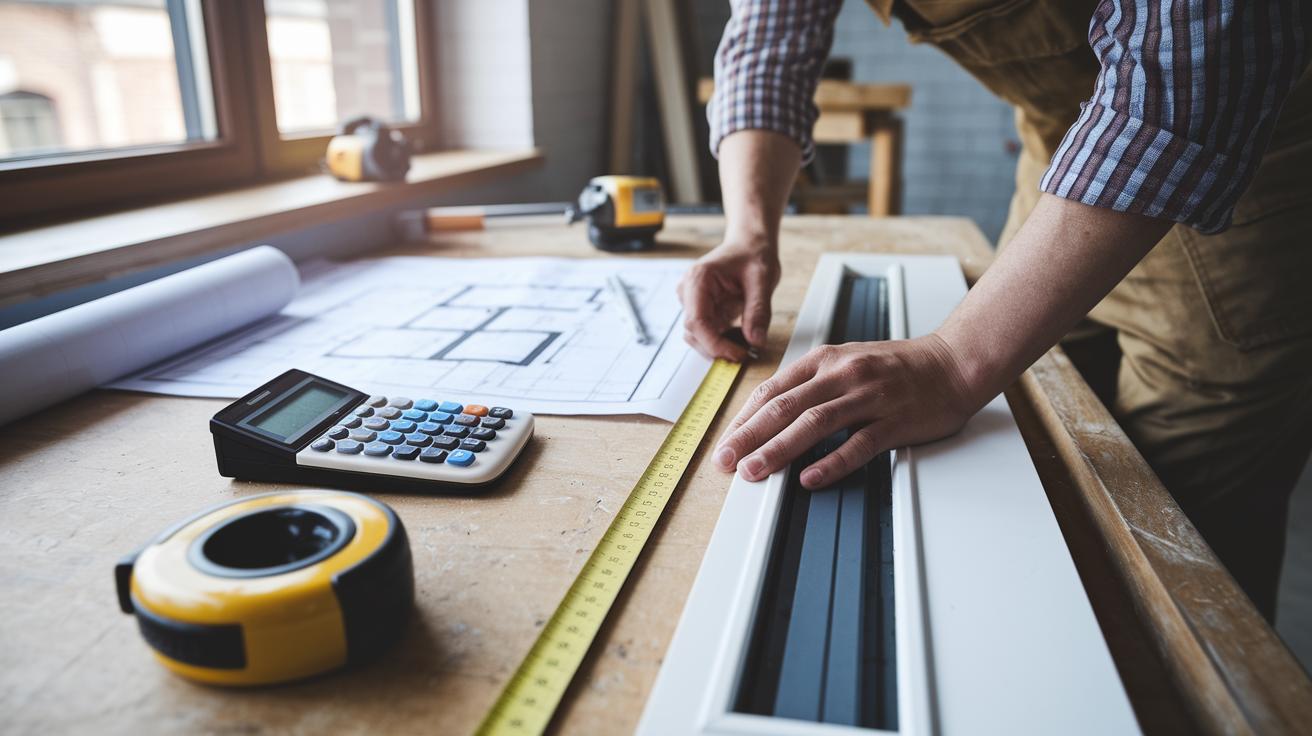
First, figure out the size of your window jamb (the vertical frame side) and the sill (the horizontal base). For example, if your current window has a 30 in (76 cm) sill, use that same measurement so your new opening matches the look of the old.
Next, measure your window’s width and add two shim thicknesses. Shims are usually 1/8 in (3 mm) thick on each side. So, for a 36 in (91 cm) window, add 1/4 in (6 mm) total. This makes your rough opening 36.25 in (92 cm) wide.
For the height, add the jamb’s height, a 1/4 in (6 mm) clearance, and the sill height. The sill is often built using two nailed-together 2x4s (actual 1.5 in x 3.5 in or 38 mm x 89 mm).
When you frame the opening, mark the header cut line. To do this, subtract the header’s height (the horizontal support beam) from the top of the side studs (called cripple studs). This line gives you a clear guide for placing the header.
Finally, drill pilot holes at each corner using a 5/8 in (16 mm) drill bit. These holes act as guides for cutting the exterior siding so it lines up perfectly with your new frame. For instance, after you measure, mark each corner with a note like “Cut a 5/8 in hole here” to keep everything straight and neat.
Constructing and Installing Window Headers in Framed Walls

Window headers support open wall designs and keep things sturdy. To build one, use two 2×12 boards (actual 1.5 in x 3.5 in / 38 mm x 89 mm) and add a spacer board between them. Nail these together with 10d nails placed every 16 in (406 mm). Think of it like stacking a strong sandwich, each layer adds support.
For longer spans, follow the header sizes outlined in the International Residential Code. Here’s a simple process: cut two 2×12 boards to the needed length, sandwich a spacer board in between, and secure all pieces with 10d nails at 16 in (406 mm) centers. This makes sure the header will hold the load without bending or pinching nearby windows or doors.
Next, install the header between the king studs (the full-height side members of the wall). The jack studs (or trimmers) sit under the header and help transfer the weight down to the bottom plate. Make sure the header sits snugly between the king studs so that the jack studs can safely carry the load.
Lastly, remember that while door headers use similar methods, window headers must line up perfectly with window sills. Always double-check the spacing and nail pattern to create a uniform, load-bearing beam that stays strong over time.
Framing Studs: King, Jack, and Cripple Stud Installation

Placing each stud in the right spot is key. King studs run the full height beside the window opening, linking the bottom plate (floor) to the top plate (ceiling). Think of them as the frame’s main pillars that hold everything steady.
Jack studs (or trimmer studs) are cut to match the header’s height. Install one jack stud on each side under the header to support its weight and pass the load safely to the bottom plate. Quick tip: check that the jack studs are level after cutting so the header sits square.
Cripple studs above the header carry the weight of the top plate and transfer it down to the header. Cripple studs below the sill fill in the gap between the rough sill and the bottom plate to keep the support continuous.
- Make sure each stud is plumb (vertically straight) and flush for even load distribution.
- Double-check every cut for a snug fit with your header and sill.
Think of it like setting up a strong scaffold. Each stud plays a key role in building a balanced and secure framework for your window opening.
Integrating rough sills and jamb installation for window openings

Begin by nailing two 2x4s (actual 1.5 in x 3.5 in / 38 mm x 89 mm) together. Let this rough sill rest on the jack studs without carrying the wall's load. Check that the sill is level using a small bubble level. Adjust it until the bubble sits in the center.
Next, insert the window jamb into the opening after you confirm the sill is set correctly. Drill pilot holes (about 5/8 in / 16 mm diameter) through the siding at the corners to guide your cuts from the outside. Use shims to fill 1/8 in (3 mm) gaps at each corner until the jamb stands plumb and level. Replace or add shims as needed so a level shows the jamb is perfectly vertical and flat.
Finally, fasten the jamb flanges firmly following the manufacturer’s instructions. This strong connection helps when you later add flashing and caulk for weatherproofing. Watch for any misalignment or warping and adjust the shims as needed. Always wear eye protection when drilling or hammering, and double-check all measurements to prevent issues during the finishing work.
Code Compliance and Safety Measures in Wall Framing with Windows
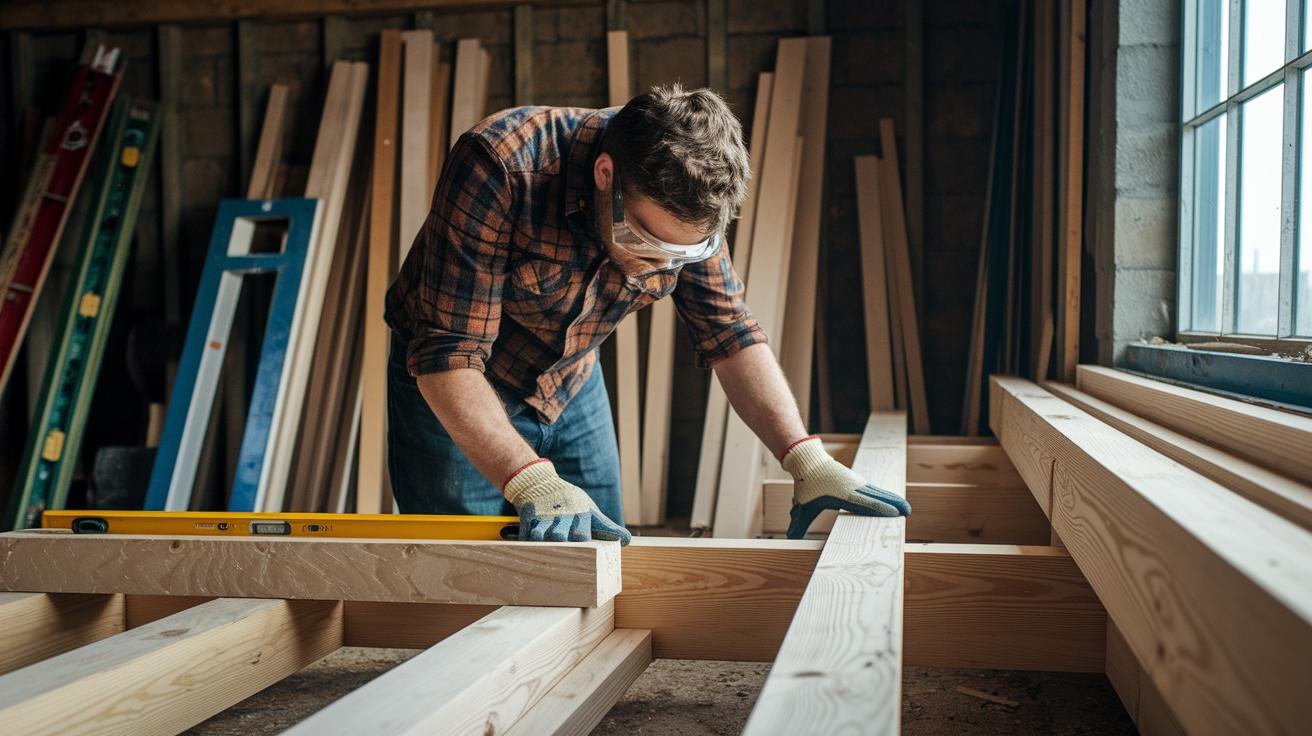
Before you start framing, check the latest IRC header-size tables and ask your local building department about permits. This step makes sure your work meets code for windows.
Confirm that your chosen lumber fits the code standards. For example, a 2×12 (actual 1.5 in x 3.5 in / 38 mm x 89 mm) header must be strong and durable for the job.
Always wear safety gear like gloves and goggles to protect against sawdust and debris. Brace your walls during header installation to keep them steady and avoid accidental movement.
Use a level to keep the studs plumb and square. Measure clearances within a tolerance of 1/16 in (about 1.6 mm) for accurate work.
Also, plan your inspections and file for any needed permits before you begin. This careful planning ensures the project is safe, code-compliant, and built to last. Always check with your local building department for any updates or extra advice before you start framing.
Final Words
In the action, you learned the essentials of framing a wall with windows. We walked through removing coverings, measuring openings, building sturdy headers, installing king and jack studs, and aligning rough sills with precise jamb placement. Safety gear, code checks, and permit guidelines were also highlighted so your project stays secure and compliant. Each step builds confidence, cuts costs, and boosts your DIY skills. Keep these tips in mind and enjoy transforming your space both safely and efficiently.
FAQ
How do I frame a wall with windows and doors?
Framing a wall with windows and doors starts by removing wall coverings, exposing studs, marking and measuring rough openings, then installing headers, king studs, jack studs, and proper trim and flashing.
How do I frame a window for trim, replacement, or new installation?
Framing a window for installation or replacement begins with measuring the rough opening (window width, shims, and sill height), installing a header made of two 2×12s and a spacer, adding king and jack studs, and finishing with shimming and trim.
What is decorative framing around windows?
Decorative framing around windows means adding aesthetic trim and molding to cover structural details, enhancing the look of the window while providing a finished, cohesive appearance with the home’s exterior.
How do I frame a window in an existing wall?
Framing a window in an existing wall involves carefully cutting into the wall, reinforcing nearby studs, accurately measuring the new opening, installing a properly sized header, and securing jambs with precise shimming and finishing touches.
How do I create a frame around a window outside?
Creating a frame around a window outside requires building a weatherproof frame by installing a rough sill from two 2×4s, setting king and jack studs, adding flashing for moisture protection, and sealing gaps with caulk.
What are key window framing details to ensure stability and weatherproofing?
Key details include correctly sized headers per IRC guidelines, evenly spaced king, jack, and cripple studs for load transfer, precise shimming for plumb installation, and added flashing with caulk to prevent water intrusion.
What are common mistakes when framing a wall?
Common mistakes include inaccurate measurements, misaligned studs, using an undersized header, inadequate shimming for level installation, and skipping essential steps such as installing proper flashing and caulk.
Can a wall have a window and still be load bearing?
A wall with a window can remain load bearing if designed with proper header sizing, adequate king and jack studs to support the header, and correct placement of cripple studs to transfer loads safely around the opening.
Where should studs be placed around a window?
Studs should be placed with full-length king studs on both sides of the window, jack studs directly under the header, and cripple studs above or below the opening to evenly distribute structural loads.