

Are high energy bills getting you down? Rigid foam insulation is a budget-friendly fix that acts as a solid shield for your home. It helps keep the heat inside during winter and holds back the heat in summer. Plus, it reinforces your walls and foundation. Homebuilders and DIYers prefer this insulation board because it's easy to install and delivers fast results. In this guide, we compare different foam board types and help you pick the best one for your project so you can save money and finish your job on time.
rigid foam insulation Empowers Construction Savings
Rigid foam insulation comes as a pre-cut, sturdy board that you can install on roofs, exterior walls, and basement slabs. It acts as a continuous layer to block heat loss, keeping interiors warm in winter and cool in summer. Builders and DIYers favor it on both commercial and residential projects because it’s tough and easy to install. For instance, when you insulate a basement with rigid foam, it serves as both an energy barrier and structural support, making the job faster and more efficient.
This insulation cuts your heating and cooling bills while boosting home comfort. It also comes in different types for different needs. EPS (expanded polystyrene) offers an R-value of 3.6–4.2 per inch (inches: 2.54 cm each), XPS (extruded polystyrene) has an R-value of 5 per inch, and Polyiso (polyisocyanurate) provides about 6.5 per inch. Each type works well in specific settings, whether in damp areas or high-performance projects. Plus, its continuous panel design helps reduce gaps and heat bridges.
- high R-value per inch
- moisture resistance
- continuous coverage
- structural support
- space-saving profile
This guide sets you up to compare different board options and performance features so you can choose the right rigid foam insulation for your project.
Detailed Comparison of Rigid Foam Board Types
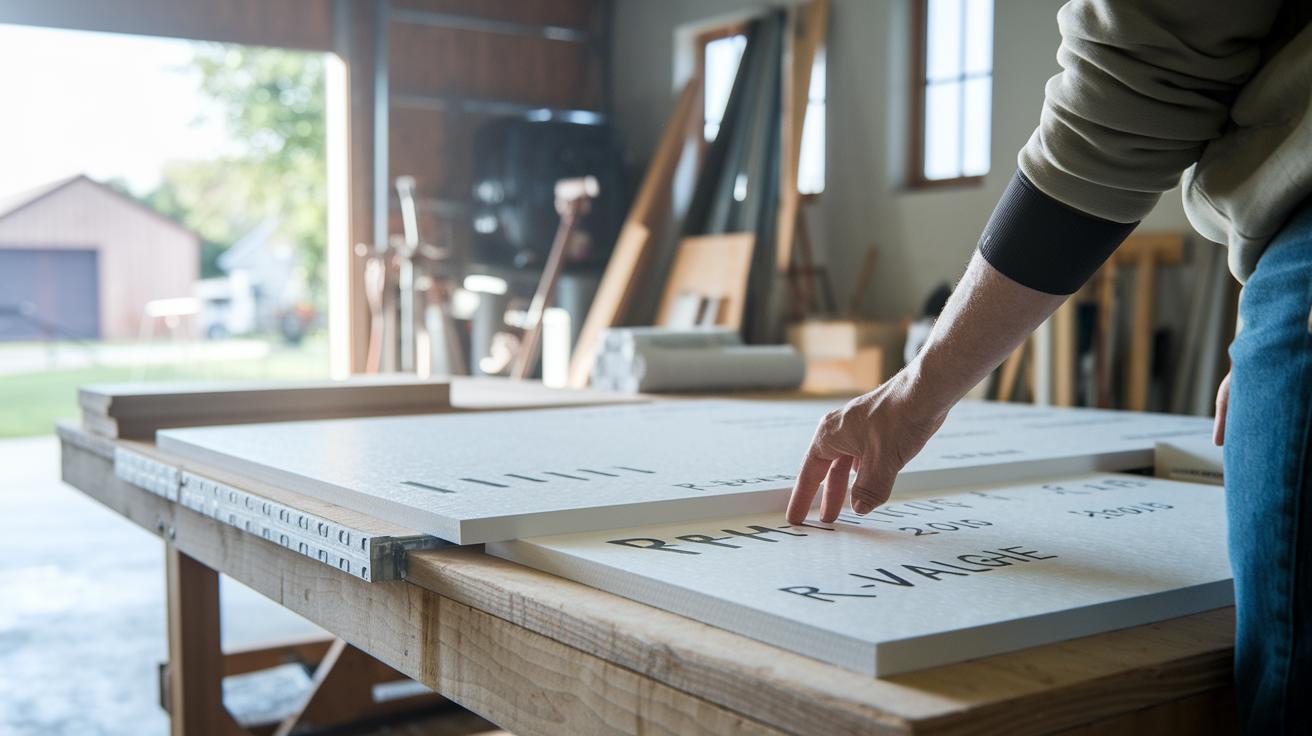
Choosing a foam board for your project is like picking the right tool from your toolbox. Match the board’s performance to what your project needs. Each type offers a mix of cost, insulation value (R-value), and moisture resistance. For example, an attic insulation project won’t need as much moisture resistance as a basement wall. Pick the one that fits your task and budget.
Expanded Polystyrene (EPS)
EPS is a budget-friendly choice that’s easy to work with. It has an R-value between 3.6 and 4.2 per inch (about 0.3–0.35 per mm) and works well for many uses. However, if water is a concern, you’ll need to add an extra moisture barrier. Its lightweight nature means it is simple to cut and fit. For a garage insulation project on a tight budget, EPS is a smart pick.
Extruded Polystyrene (XPS)
XPS offers an R-value of about 5 per inch (approximately 0.42 per mm). Its dense structure makes it more durable and better at resisting moisture. This strength comes at a higher price of roughly 20–30% more than EPS. In areas with high humidity, investing in XPS can keep your walls or floors safer from water damage.
Polyisocyanurate (Polyiso)
Polyiso stands out with the highest R-value at around 6.5 per inch (about 0.54 per mm). It also has a greener side, featuring about 9% recycled content and less-toxic flame retardants. You need less material for the same insulation effect, but it comes with a higher cost. Note, Polyiso isn’t ideal for below-grade work where moisture is a constant challenge. It works best for roof decks or interior spaces where top insulation performance matters most.
Other materials like Expanded Polyurethane (EPU) at R-5.9 per inch and mineral wool, which gives steady insulation along with fire protection and noise reduction, serve specific roles when you need extra strength and non-toxic options.
| Type | R-Value (per inch) | Moisture resistance | Cost | Common use |
|---|---|---|---|---|
| EPS | 3.6–4.2 | Moderate (needs extra barrier) | Lowest | Walls, attics |
| XPS | 5 | High | 20–30% more than EPS | Exterior walls, below-grade |
| Polyiso | 6.5 | Moderate (water can be an issue) | Highest | Roof decks, interiors |
Installation Practices for Rigid Foam Boards
Start by gathering your tools: a tape measure, a utility knife, a saw, foam sealant, construction adhesive, mechanical anchors, and protective gloves. Clear off the substrate by removing all debris. If your area tends to be moist, set up a moisture barrier. Check that your framing is plumb (vertically straight) and level so that the foam boards will have proper support and no air leaks occur. For example, a dry and even wall helps the boards fit right the first time.
Always measure twice (in both feet and meters) before marking where you’ll cut the foam board. Use a sharp utility knife or saw to make clean cuts so each board fits snugly against the next. This tight placement helps block heat loss. Once the boards are in place, seal every seam with approved tape or foam sealant. Think of it like a puzzle where every piece touches its neighbors, miss a gap and you lose performance.
Choose the right fasteners for your project. Mechanical anchors work well for secure spots, while construction adhesive gives extra hold around tricky shapes. Trim the boards carefully around openings like window frames and electrical boxes to maintain a continuous layer of insulation. Finally, perform a full inspection to make sure every board is fastened securely and every seam is sealed. This check not only follows installation codes but also boosts your structure’s energy efficiency.
Rigid Foam Insulation Cost Breakdown and Long-Term Savings

EPS (expanded polystyrene) is the most budget-friendly board available. It costs less per inch compared to other insulation types. XPS (extruded polystyrene) runs about 20–30% higher than EPS, while Polyiso boards can be up to 40% more expensive for each inch. Options like EPU and mineral wool fall in between XPS and Polyiso in price. These numbers show not just the material cost but the value per inch, helping you pick the right board to meet your insulation needs.
Energy savings make up a big part of the return on your investment. Improved efficiency from these boards can pay off in as little as 3 to 7 years by lowering your monthly utility bills. For example, if you save about $50 (roughly $50 / month) on your energy bill, the insulation quickly pays for itself. By working out the return on investment using initial costs and saved energy, budgeting for long-term benefits becomes easier.
Good insulation also reduces future maintenance work and can boost your home’s resale value. Homes with energy-efficient updates usually have lower maintenance needs and attract buyers who want to save on energy costs. This increased efficiency can make your home more appealing when it’s time to sell.
Rigid Foam Insulation Applications Across Home Areas
Homeowners and contractors sometimes need to adjust standard insulation methods to fit unique job sites. For instance, one contractor working in a damp basement used XPS (extruded polystyrene foam insulation, a type of rigid foam) but added a moisture-resistant membrane around the slab edges to block water. He explained that when he installed XPS in a wet crawl space, the added barrier prevented future issues. This shows how adapting techniques to local conditions is often essential.
In another case, a homeowner upgraded an attic using polyiso (polyisocyanurate foam insulation, known for its high R-value) in a room with rapid temperature changes. The contractor paired the insulation with better ventilation and a custom board layout to manage heat flow. He noted that fitting polyiso in a tight attic meant making precise cuts and performing extra inspections. His experience proves that real-life challenges sometimes call for custom solutions beyond textbook instructions.
Sustainability and Environmental Considerations for Rigid Foam Insulation

Rigid foam insulation comes in different forms that affect your project's impact on the environment. For example, Polyiso panels include about 9% recycled content and use flame retardants that cut down on harmful emissions. Mineral wool is made from recycled stone dust and is a natural, non-toxic, and fire-resistant choice. In contrast, EPS and XPS come from petroleum. This gives them a higher carbon footprint (the total carbon emissions from production) and recycling options differ by region. Always choose insulation based on your project needs and environmental goals.
At the end of a building's life, you must dispose of insulation properly. Polyiso and mineral wool often can be recycled through special programs, which cuts down on waste. But EPS and XPS have fewer recycling choices in many places, leading to more landfill waste. Check your local guidelines and select materials that meet environmental standards. This approach lowers long-term waste, supports sustainable building practices, and helps protect community health.
Technical Standards and Code Compliance for Rigid Foam Insulation
Building codes set minimum R-values (a measure of how well insulation resists heat flow) that change with your climate zone. Check your manufacturer’s guide; it has tables showing which board thickness works for your area. In colder spots, you might need a thicker foam board to hit the right R-value per inch and follow your local energy rules. These guides also share the proper ways to install the board and list the temperature ratings your insulation must meet. Use them when you plan your project to be sure your foam board creates an effective thermal barrier.
When foam insulation is left exposed, you must cover it with a fire-rated barrier such as drywall or plaster to pass fire safety codes. These barriers are tested to slow down flame spread and handle high heat. Certification documents and technical details show you which fire-retardant materials to use and how to install them correctly. Look at these documents to make sure your installation meets both energy efficiency and fire protection standards.
Final Words
In the action, we’ve covered rigid foam insulation basics, from board types and installation practices to cost savings and environmental considerations. The guide detailed how different panels, proper fitting, and code compliance work together to boost energy efficiency and lower bills.
This straightforward overview gives you the tools to choose, install, and safely use rigid foam insulation. With clear steps and practical tips, you’re set to achieve lasting comfort and progress on your home projects.
FAQ
What do various foam insulation board thicknesses offer (e.g., 1/2 in, 1 in, 2 in, 3 in, 4 in)?
Various foam insulation board thicknesses provide different levels of thermal resistance. Thicker boards yield higher R-values and improve energy savings in walls, roofs, and basements.
What is the R-value of rigid foam insulation?
Rigid foam insulation offers an R-value of about 3.6 to 6.5 per inch depending on the board type, indicating its capability to resist heat flow effectively.
What should I know about 3 inch rigid foam insulation at Lowe’s?
A 3 inch rigid foam insulation board at Lowe’s delivers improved thermal performance for energy efficiency while fitting common residential applications; product specifics can vary by brand.
What are the disadvantages of rigid foam insulation?
Rigid foam insulation can be vulnerable to UV exposure if not covered, may be flammable without proper treatments, and requires careful installation to avoid gaps and moisture accumulation.
What is the R-value of 2 inches of rigid foam?
The R-value of 2 inches of rigid foam doubles the per-inch rating; for example, an XPS board around R-5 per inch totals about R-10, while EPS and Polyiso yield approximately R-8 and R-13 respectively.
Do I need a vapor barrier with rigid foam insulation?
The need for a vapor barrier with rigid foam insulation depends on climate and local codes; sometimes the board serves as its own moisture barrier, but additional protection might be required.
What is rigid foam insulation?
Rigid foam insulation is a solid board used to reduce heat loss in building envelopes such as roofs, walls, and basements, enhancing energy efficiency with its high thermal resistance.