

Have you ever wondered how a bit of foam can help trim your energy bills? R-value spray foam insulation wraps your home like a snug blanket. It holds in warm air during winter and traps cool air during summer. Its clear rating guides you to the right product, so you know you're making a smart choice. Choosing the right foam means lower bills and a cozier home. Read on to see how this energy-saving insulation keeps your house safe, comfortable, and on budget.
r-value spray foam insulation: Boost Energy Efficiency
R-Value tells you how well insulation resists heat loss. It is measured in h·ft²·°F/Btu, a set unit to compare different materials. For example, a spray foam panel with a high R-Value can keep your home warmer in winter without extra energy use. This clear number helps you choose the right insulation and meet building codes.
R-Value also helps lower your energy bills. Good insulation means your heater or air conditioner runs less, saving money. Picture your monthly bill dropping because your home stays comfortable all year. This measurement ensures your insulation is both code-compliant and energy efficient.
When using spray foam insulation, the foam type matters. Closed-cell foam usually has an R-Value between 5.6 and 8.0 per inch (each inch adds that much resistance). Open-cell foam gives about 3.6 per inch. Thicker insulation increases thermal resistance, but too much can cause problems like improper curing. For instance, 2 inches of closed-cell foam might give an R-Value from 11 to 16. This balance of thickness and proper curing is key to top insulation performance.
Comparing Open-Cell and Closed-Cell R-Value Performance

When choosing spray foam insulation, it's important to compare closed-cell and open-cell options. Closed-cell foam packs a higher R-value per inch (R-value tells you how well the material resists heat flow), making it ideal when space is tight and you need extra moisture resistance. Open-cell foam is less dense and softer; it's best for larger spaces where top-notch thermal performance isn’t the main concern.
| Foam Type | R-Value per Inch | R-Value for 2″ Application |
|---|---|---|
| Closed-Cell Foam | 5.6–8.0 | R-11 to R-16 |
| Open-Cell Foam | Approximately 3.6 | R-7.2 |
| 2×6 Wall Comparison | N/A | Closed-cell: R-31 to R-44; Open-cell: ~R-19.8 |
Closed-cell foam suits projects that demand a tight, high-performance seal, especially in areas prone to moisture like walls. Open-cell foam, meanwhile, is a smart choice for areas where you’re balancing cost and sound control. Pick the option that matches your insulation needs, your performance targets, and your building requirements to boost energy efficiency safely and effectively.
Key Factors Affecting Spray Foam R-Value Outcomes
Spray foam insulation works best when you balance key technical elements. Its ability to slow heat flow depends on the foam’s chemical make-up (a mix of polyol resin and isocyanate), its density, and how the cells form during mixing. A smooth mix and proper cell structure can make a big difference in how well the insulation works.
Getting a solid result also means applying and curing the foam correctly. For closed-cell foam, you often need several passes to build an even layer. Keep your surface at 60–80°F (16–27°C) and the air around 20–50% humidity while curing. If the foam doesn’t stick well, gaps can form. These gaps lower the insulation’s overall R-Value and waste material.
Key factors include:
- Material composition and mix ratio
- Foam density and cell structure
- Number of layers and desired thickness
- Surface preparation and adhesion quality
- Ambient temperature and humidity during curing
- Diminishing gains from too much foam
Watch these details to make sure every layer performs as it should. When you control the mix, density, layers, and curing conditions, the foam sets evenly. This consistency builds the target R-Value and gives you efficient, reliable insulation that cuts energy costs and boosts comfort.
Best Practices for Maximizing R-Value During Spray Foam Installation
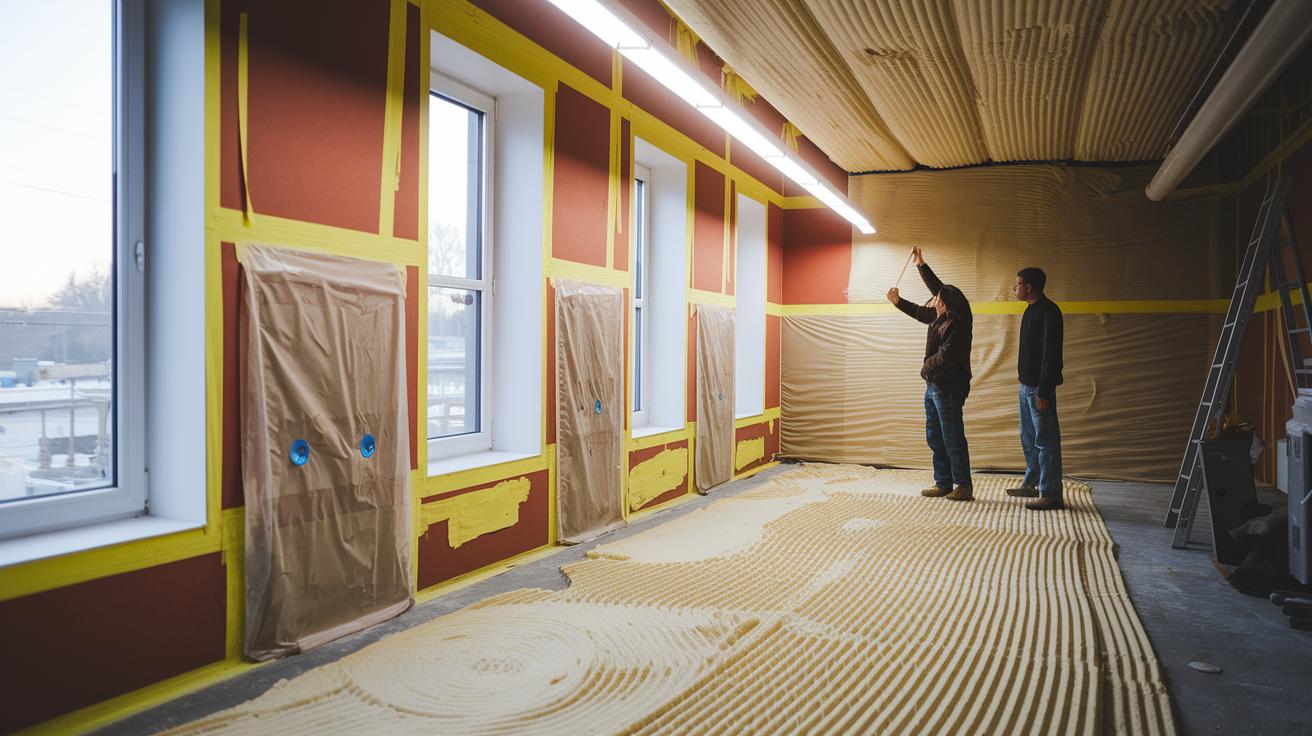
Start by cleaning the work surface thoroughly. Remove dust, debris, and old glue to help the foam adhere well. Cover windows, trim, and outlet boxes with painter’s tape and protective sheets to avoid overspray. Think of it like prepping a canvas before painting, a clean start makes for a smooth finish.
Keep the area at a steady temperature between 60°F (16°C) and 80°F (27°C) and maintain humidity around 20% to 50%. These settings create a mini climate that helps the foam cure right and form strong cells.
When applying the foam, use layers that are just the right thickness. Use 2–3 inches (5–8 cm) for closed-cell foam and 6–10 inches (15–25 cm) for open-cell foam. Apply each layer in even passes, imagine spreading peanut butter evenly over bread to cover all gaps.
Before you start, calibrate your equipment and check the settings during use. Always wear gloves, goggles, and a respirator. Once the job is done, give the foam a gentle test for an even texture and good adhesion. This final check ensures your insulation will boost energy efficiency.
Energy Savings and Cost Efficiency of High R-Value Foam
High R-Value spray foam insulation saves energy by lightening the load on your heating and cooling system. Research shows that raising the R-value can cut HVAC work by about 35%, which means your system runs less often. In simple terms, stronger insulation keeps warm air in during winter and blocks heat in during summer, much like adding an extra layer of protection when the weather turns extreme.
Project costs can vary. Factors such as material type, size of the area, ease of installation, removal of old materials, and labor rates all influence the final price. For example, one Atlanta homeowner in 2026 chose a budget-friendly closed-cell foam (a dense, moisture-resistant insulation option). This not only boosted energy savings but also reinforced the structure. A straightforward ROI check shows that lower energy bills can cover the installation cost in just a few years, making the upgrade a smart long-term investment.
In the long run, spray foam insulation beats traditional options like fiberglass. Closed-cell foam controls moisture and strengthens walls, stopping drafts and keeping temperatures even throughout your home. With fewer repairs needed and improved energy use, you save money over time. Simply put, choosing high R-value spray foam insulation gives you instant savings and lasting comfort while protecting your home from the elements.
Meeting Building Codes and R-Value Standards with Spray Foam

Building codes set minimum insulation ratings based on where you live. For example, wall insulation usually needs a rating of R13 to R19, and attics might require up to an R49 rating. These numbers change with your climate, the area you insulate, and your building's design. The goal is clear, keep heat in during winter and out during summer.
Document every detail of your installation for a smooth inspection. Write down the type of spray foam you use, how many layers you apply, and how thick each layer is. Also, note the curing conditions, such as temperatures from 60°F (16°C) to 80°F (27°C) and humidity levels of 20% to 50%. Keeping organized logs and simple diagrams lets inspectors quickly confirm that your foam meets both local and national insulation standards.
Advanced R-Value Techniques and Future Trends in Spray Foam Insulation
Next-generation high-density closed-cell foams now push past R-7 per inch (R-value measure) in thermal resistance. Manufacturers are fine-tuning their mixes with new chemical blends to boost energy efficiency. They also add bio-based polyol resins (plant-derived materials) from renewable resources. These tweaks not only raise the R-value but also cut down on environmental impact, meeting the need for more sustainable building methods.
New equipment and mix technology are changing the way spray foam is applied. Modern metering pumps deliver the precise mix of polyol resins and isocyanate (the chemical that reacts to form the foam) every time. This precision cuts waste and keeps foam quality even over large jobs. Improved tools and calibration mean installers can reach the right thickness with fewer passes, ensuring top-notch R-value performance with every application.
Looking ahead, spray foam is set to embrace more sustainable and climate-smart techniques. Researchers are creating eco-friendly blends that come with strong thermal barrier ratings and meet modern building codes. Climate-adaptive systems adjust to local weather, making sure the foam cures right even in tough conditions. These advances let contractors install spray foam that is both efficient and reliable for today’s building needs.
Final Words
In the action, this post broke down r-value basics in spray foam insulation, covering how it measures heat resistance and comparing open-cell to closed-cell types. It detailed key factors that impact performance, step-by-step installation tips, and real energy savings. The guide also touched on building code standards and advanced techniques shaping the future of insulation. All these insights help you achieve effective, budget-friendly projects with lasting comfort and efficiency.
FAQ
What is the R-value of spray foam vs fiberglass?
The R-value of spray foam exceeds that of fiberglass. Spray foam typically offers R-6 to R-8 per inch, while fiberglass reaches R-3 to R-4 per inch, making spray foam more energy efficient.
What R-value does closed-cell spray foam provide?
Closed-cell spray foam generally provides an R-value between 5.6 and 8.0 per inch, offering superior thermal resistance and added structural support in tight spaces.
What does a closed-cell spray foam R-value chart show?
A closed-cell spray foam R-value chart typically displays values from 5.6 to 8.0 per inch, helping users choose the right foam based on thickness and insulation needs.
What is the R-value of open-cell spray foam?
Open-cell spray foam usually has an R-value of about 3.6 per inch. This type offers sound reduction benefits but provides less moisture resistance compared to closed-cell foam.
What is the R-value of spray foam in a 2×4 wall?
A 2×4 wall insulated with spray foam can yield an R-value of roughly R-11 to R-16 with closed-cell foam or around R-7.2 with open-cell foam, depending on the product used.
How does the R-value of spray foam relate to insulation cost?
The cost for spray foam insulation depends on the R-value achieved, installation complexity, and material type. Higher R-values, often from closed-cell foam, may cost more initially but provide better energy savings.
What R-value is achieved with a 5.5-inch layer of spray foam?
A 5.5-inch layer of closed-cell spray foam can achieve an R-value between R-31 and R-44, while open-cell foam would yield closer to R-20, varying with product specifics.
What R-value does 3 inches of closed-cell foam provide?
Three inches of closed-cell foam typically offer an R-value between 16.8 and 24, according to installation conditions and the specific foam product used.
How many inches of spray foam are needed for R30, and how do you achieve it?
To reach an R30 rating, approximately 4 inches of closed-cell spray foam is needed, given its per-inch R-value of 5.6 to 8.0. Open-cell foam would require a much thicker application to meet the same rating.
What is the per-inch R-value of 2 lb closed-cell spray foam?
A 2 lb closed-cell spray foam typically offers an R-value of about 6 to 7 per inch, providing a balance between effective insulation and structural reinforcement.