

Noticed your energy bills rising? Closed cell spray foam insulation fills every gap and blocks moisture. It stops energy waste and can cut your bills by more than 50% in harsh weather. This strong foam sticks tight to surfaces, sealing your home like a cozy blanket while making walls and roofs even sturdier. In this post we show you how this insulation saves energy and keeps your indoor temperature steady so you can protect your home and save money.
Closed cell spray foam insulation powers energy savings
Closed cell spray foam insulation is a durable, expanding foam that fills gaps and cavities. Homeowners and small contractors choose it because it not only keeps heat in but also stops moisture from getting in. With an R-value of 6–7 per inch (which measures insulation power), it cuts energy waste and helps lower your bills by more than 50% during extreme weather. The foam bonds closely to surfaces, forming an airtight seal that drastically reduces air leaks.
- R-value of 6–7 per inch means top-notch insulation.
- Cuts energy use by 50% or more, helping reduce your energy bills.
- Seals gaps so air moves 24 times slower, keeping your home tighter.
- Blocks moisture effectively, even during flooding.
- Its inert polymer mix helps prevent mold and mildew.
- High compressive strength makes walls and roofs stronger.
- Lasts indefinitely so you won't need to re-insulate over time.
These features combine to create walls and roofs that stay energy efficient and protect against moisture. In short, installations using closed cell spray foam insulation keep indoor temperatures steady and shield building structures from dampness and mold. This long-lasting solution is a smart choice for both homes and businesses that need performance and durability without extra upkeep.
Thermal Performance and R-value of Closed Cell Spray Foam Insulation

Closed cell spray foam insulation has an R-value of 6–7 per inch, which beats other materials like fiberglass batts (around 3–4 per inch) and cellulose (about 3–3.5 per inch). Its dense makeup cuts down on heat movement through your walls, reducing both heating and cooling loads.
| Insulation type | R-value per inch |
|---|---|
| Closed cell spray foam | 6–7 |
| Fiberglass batts | 3–4 |
| Cellulose | 3–3.5 |
Using a digital R-value calculator makes it easy to determine the right foam thickness. Just enter your local climate details and wall dimensions, and the tool works out the numbers for you. One builder found that dialing in the perfect thickness dropped his heating costs by 15% in a cold climate. Case studies confirm that in extreme weather conditions, closed cell spray foam delivers reliable energy savings while keeping indoor spaces comfortable.
Moisture Resistance and Structural Strength of Closed Cell Spray Foam Insulation
Closed cell spray foam insulation creates a tight polymer barrier that stops vapor and water from getting inside. Its compact cells block damp air and water from entering walls and roofs. In one project, homeowners found that a once-damp attic stayed dry during heavy rain because the foam sealed it well.
The foam also boosts structural strength. Its high compressive strength reinforces wood or metal framing in homes and commercial buildings. This extra support helps prevent sagging and warping, keeping your structure strong where it counts.
Cost Analysis and Long-Term Savings with Closed Cell Spray Foam Insulation

When you get ready to install closed cell spray foam insulation, first figure out your board-foot price, square-foot coverage, and overall budget. Typically, you pay about $1 to $3 per board foot installed. To calculate your total cost, measure the wall or ceiling area (in square feet) and work out how many board feet you need. For instance, if you need 500 board feet, you could spend between $500 and $1,500. While this cost might seem higher than options like fiberglass or open cell foam, remember that it is built into long-term energy savings.
Over time, these energy savings help cover your investment. Many people see energy costs drop by over 50%, which means the foam pays for itself with lower heating and cooling bills. Plus, since closed cell spray foam insulation lasts indefinitely, you won’t face regular re-insulation costs. By using less energy and cutting maintenance, this insulation offers significant cost benefits for both homes and commercial properties.
Installation Process and Best Practices for Closed Cell Spray Foam Insulation
Make sure a trained professional with certified tools handles your spray foam job. They know how to mix and apply the foam evenly using specialized equipment. A pro will first do a safety check to confirm that every tool is calibrated properly. This careful step makes sure the foam adheres well and saves energy.
Start by prepping the work area. Dry and clean the wall or roof cavities and remove dust and loose debris. Next, set up the spray foam system and keep the nozzle at the right distance so the foam covers the entire surface evenly. Let it expand fully (6 ft [1.8 m] or as needed) before it starts to harden. Then, trim off any extra foam to create a neat finish. These steps help the foam bond well and fill every gap.
Follow safety best practices from start to finish. Keep the work area at a steady temperature and ensure good ventilation so the foam cures correctly. Always wear protective gear like a respirator, gloves, and safety glasses. Check your work often to catch mistakes early. This approach makes sure every layer of foam performs as expected and keeps your home energy-efficient.
Closed Cell Spray Foam Insulation vs Other Insulation Types
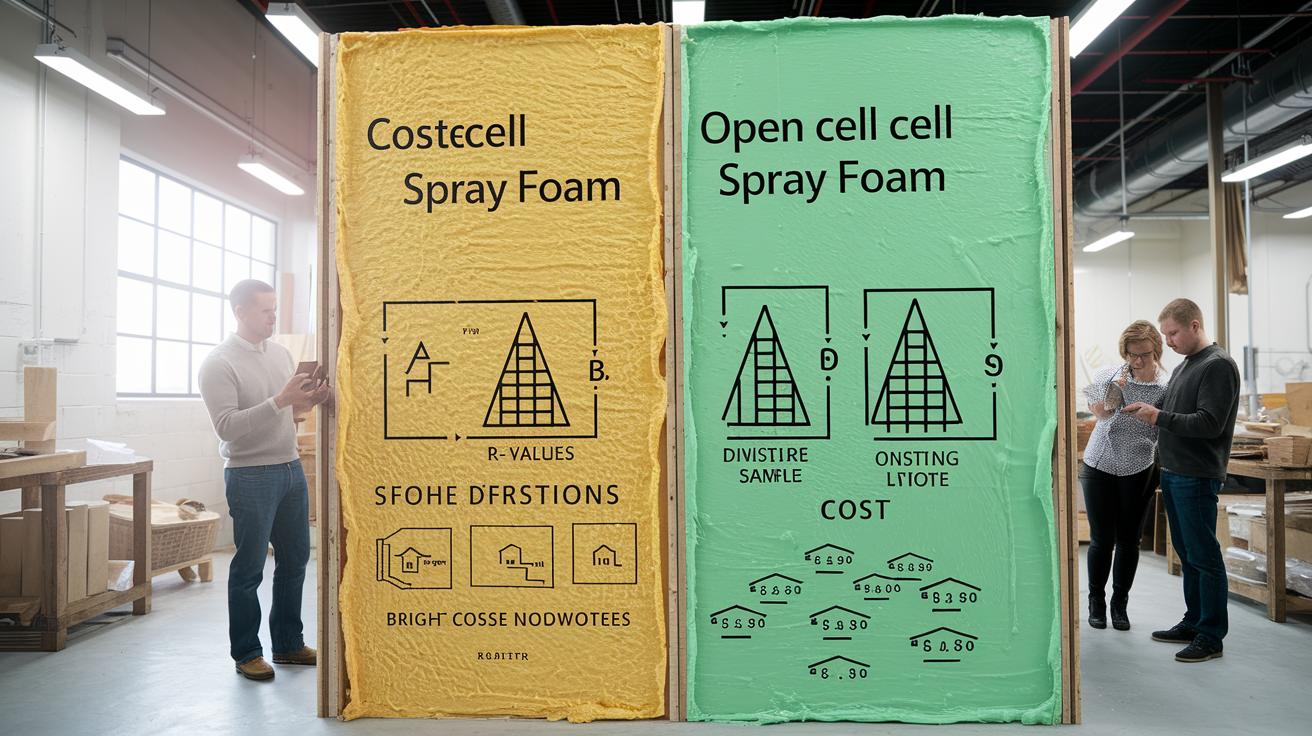
When picking insulation, focus on heat resistance, moisture control, and overall cost. Closed cell foam offers high R-values and serves as a vapor barrier, while open cell foam cuts costs and stays flexible. Fiberglass batts are a practical choice for DIY projects.
| Insulation Type | R-Value per Inch | Moisture Resistance | Cost |
|---|---|---|---|
| Closed Cell Spray Foam | 6–7 | Works as a vapor barrier and adds strength | $1–$3 per board foot |
| Open Cell Spray Foam | About 3.5 | More vapor permeable; best in low-moisture spots | More affordable |
| Fiberglass Batts | 3–4 | No vapor barrier; ideal for DIY use | $0.40–$1.50 per sq ft |
Closed cell foam is best when you need top-notch heat resistance and moisture protection. Open cell foam works well when you’re on a budget and moisture isn’t a big concern, like in a low-use attic. Meanwhile, fiberglass batts offer an easy, cost-effective option for many DIY jobs.
Safety Considerations and Maintenance for Closed Cell Spray Foam Insulation
When installing closed cell spray foam insulation, follow safety guidelines closely. This foam seals tightly to cut drafts and boost indoor air quality, but it needs a well-ventilated space to work properly. Always wear a respirator, gloves, and safety glasses to protect yourself from chemicals.
Stick with local building codes and use proper application techniques to prevent common mistakes. One installer put it simply: "Always check your ventilation settings to clear airborne particles before moving on."
Closed cell spray foam insulation needs little upkeep over time. Its inert polymer resists mold and won’t break down, even in tough conditions. Still, do a quick visual check every few years to spot any damage or gaps. With an almost indefinite lifespan, a brief inspection now and then helps keep your insulation effective and your indoor air quality sound.
Final Words
In the action, we broke down how closed cell spray foam insulation offers unmatched energy performance and moisture resistance. We covered its thermal benefits, installation steps, cost analysis, and safety practices in clear, practical segments. Each part of the guide showed how these advantages transform wall and roof assemblies for better indoor comfort and reduced energy bills. Armed with this knowledge, you'll be ready to tackle projects with confidence and watch your work pay off in durability and cost savings.
FAQ
What is the R-value of closed cell spray foam insulation and its top rating?
The R-value of closed cell spray foam insulation is typically around 6–7 per inch, offering one of the highest insulation performances compared to other materials.
What is the cost of installing closed cell spray foam insulation?
The cost to install closed cell spray foam insulation generally runs between $1 and $3 per board foot, a higher upfront expense that is often offset by long-term energy savings.
Which products are considered the best closed cell spray foam insulation?
The best closed cell spray foam insulation meets specifications for high R-value, moisture resistance, and durability, with product choices varying based on project needs and installation quality.
What does a closed cell spray foam kit include?
A closed cell spray foam kit usually comes with a two-part foam system, an applicator nozzle, hose, and clear instructions for application, though professional installation is recommended.
What specifications define closed cell spray foam insulation?
Closed cell spray foam insulation is defined by an R-value of 6–7 per inch, high compressive strength, and its ability to form an effective, impermeable moisture barrier.
How can I find closed cell spray foam insulation near me?
To find closed cell spray foam insulation near you, search online for local certified installers and home improvement contractors who specialize in high-performance insulation systems.
What is open cell spray foam insulation?
Open cell spray foam insulation is a lighter, less dense product with an approximate R-value of 3.5 per inch, offering sound dampening and lower cost but less moisture resistance than closed cell foam.
Is Great Stuff a closed cell spray foam product?
Great Stuff primarily offers open cell foam products. Their formulations are designed for different applications, so it is best to review product specifications for density and R-value details.
What are the downsides of using closed cell spray foam insulation?
Closed cell spray foam insulation can be costlier and usually requires professional installation, and its rigid structure may complicate future modifications to walls or ceilings.
Why might lenders reject homes with spray foam insulation?
Lenders might reject homes with spray foam insulation due to concerns over potential hidden moisture issues, structural complexities, or challenges in traditional framing inspections.
What is the life expectancy of closed cell spray foam insulation?
Closed cell spray foam insulation is designed to last indefinitely without needing re-insulation, thanks to its stable, inert polymer composition that maintains its properties over time.
What types of Kraken Bond spray foam guns are available?
Kraken Bond offers several spray foam guns, including models with 8-inch pro tips, a 2 ft. long nozzle variant, and a long reach professional option for varied foam application needs.
What Kraken Bond foam products are offered aside from the spray foam guns?
Kraken Bond also supplies an extreme fire block polyurethane straw foam and a gaps & cracks filler straw foam insulating sealant, each designed to address specific insulation challenges.