

Ever wonder why some walls hold up while others don’t? Metal wall framing uses cold-formed steel pieces that never bow or split. Think of it like building a wall with the same dependability as your favorite power tool. It installs easily and safely while standing up to fire and pests. Switching to metal framing can speed up your build and help the environment. Learn how this engineered solution is changing the way we construct homes and buildings.
Metal wall framing: Engineered for Peak Performance

Cold-formed steel framing uses rolled, quality sheet steel to form studs and tracks without using heat. This process creates walls for both inside and outside spaces that stay straight and strong. It also reduces the chance of splitting or cracking, so you can install pieces quickly and safely, even when handling several parts at once.
CFS framing is key in today’s building projects. Studs shaped like a C and tracks that serve as the top and bottom plates work together for precise results. The system meets strict standards for performance and sustainability, giving you a dependable structure every time.
• Straight walls for a uniform look.
• Light pieces that are easy to move and install.
• Built-in fire and pest resistance for lasting safety.
• Accurate dimensions for a predictable fit every time.
• Recognized sustainability from standards like LEED®, ICC-700, ASHRAE 189.1, and IgCC.
• Uniform sizing ensures each part fits just right.
• Long-lasting durability that cuts down future maintenance.
CFS metal wall framing stands apart by mixing engineering precision with real-world benefits. Its design tackles issues like warping or splitting found in older materials. With its consistent quality, you’ll speed up your build while also meeting rising demands for eco-friendly construction. Builders and installers appreciate how these reliable walls perform on modern projects.
Comparing Metal Wall Framing to Traditional Wood Systems
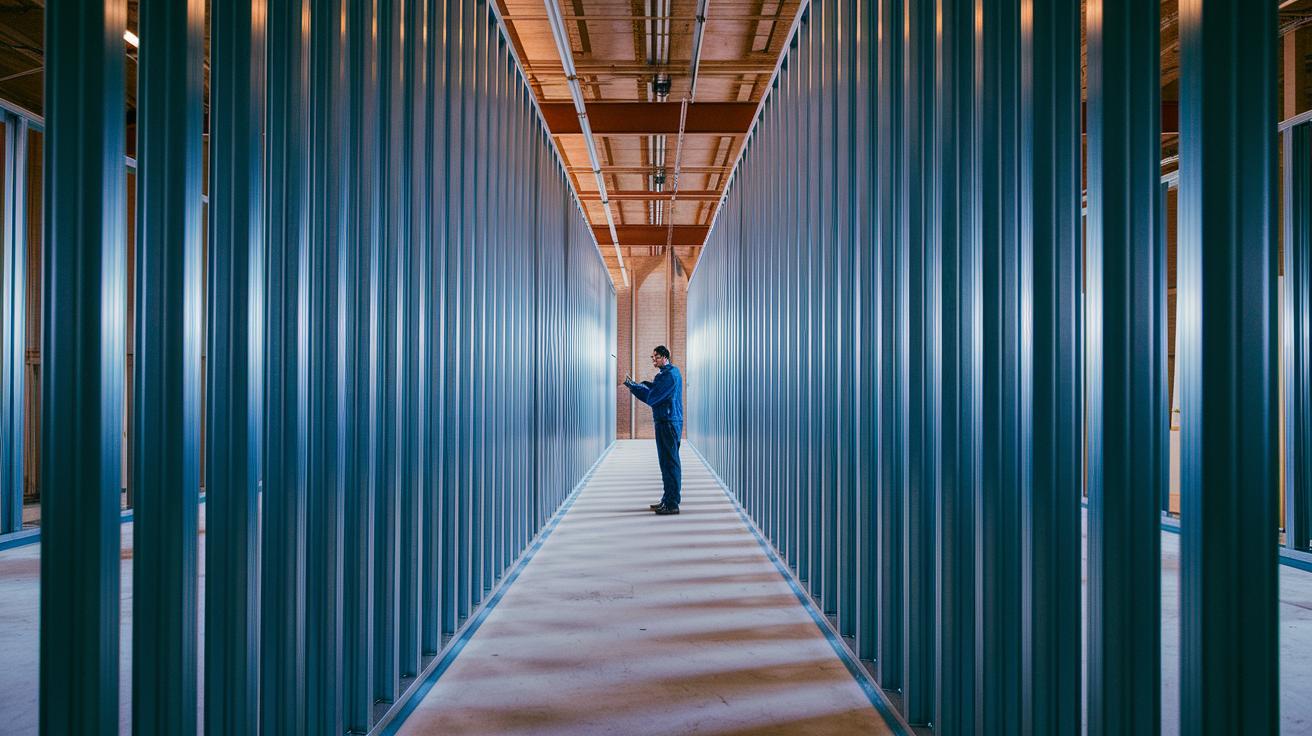
Builders have always looked for materials that work well and last longer. Today, metal wall framing, especially with cold-formed steel (CFS) studs, which are steel pieces shaped at room temperature, stands out as a smart choice. Metal studs keep walls straight and strong without warping or splitting, even when there’s moisture around. Wood studs, on the other hand, can twist and need to be thicker to support loads.
Galvanized metal studs have a special coating to stop rust, so you can install them faster and more confidently. These studs offer durability that saves work over the years. They also make finishing easier, reducing the need for frequent repairs.
| Feature | Metal Stud | Wood Stud |
|---|---|---|
| Straightness | Stays straight and won’t split | Tends to twist |
| Weight | Light and easy to handle | Heavier and tougher to lift |
| Fire & Pest Resistance | Non-combustible and pest-proof | Can be affected by insects and rot |
| Sustainability | Recyclable and meets standards like LEED®/IgCC | Contains less recycled material |
Metal framing isn’t just about a quick install. Its consistent performance means less maintenance and fewer repairs as time goes on. With steady dimensions and long-term strength, metal studs help finish your project with fewer surprises. This makes metal wall framing a strong pick for modern building projects that need both performance and sustainability.
Key Components and Design Principles of Metal Wall Framing

Stud Profiles and Gauges
Cold-formed steel (CFS) framing uses studs made from high-quality sheet steel that is roll formed into a C shape. This bending process turns a flat steel sheet into a profile that spreads the load and gives good strength. The steel’s thickness (gauge) is key. A lighter gauge works for interior partitions, while a heavier gauge is best for areas with higher loads. Because each stud is made by the same roll-forming process, they all match exactly, making alignment and installation much easier.
Track Installation and Spacing
The top and bottom tracks act as the horizontal fasteners that secure the vertical studs, keeping the wall straight and steady. Install these tracks carefully and space the studs on center, usually every 16 in (40.6 cm) or 24 in (61 cm). You also need to plan for door and window openings so that the track does not cover these gaps. This method provides a solid, level guide for placing your studs.
Bracing, Connectors, and Reinforcement
For a strong wall, add bracing elements like cross braces and stiffeners (extra metal supports that help prevent twisting). Using clips and edge reinforcements helps hold the wall together against both vertical and horizontal forces. These additional supports ensure that the wall resists loads and stays sturdy over time.
Step-by-Step Guide to Installing Metal Wall Framing

-
Start by laying out the top and bottom tracks along your wall line. Make sure you avoid placing any track over door or window openings so they stay clear.
-
Measure your wall and mark where each stud will go. Use your snips to cut the metal studs. Score and bend them carefully to leave smooth, burr-free edges.
-
Place one full-length stud along the top plate to use as a guide. Then cut each stud to be 0.25 in (6 mm) shorter than your floor height. This small trim helps the wall sit level even if the floor isn’t perfectly flat.
-
Protect your extension cords and wiring by laying a spare track piece upside down along the cord route where you’ll be cutting or fastening. This shields the wires from the sharp edges.
-
Fit scrap track pieces as blocking between the studs. Fasten these blocks securely with drywall screws. When you mount heavy fixtures, cut notches in a solid blocking board (like plywood or a 2×4, actual 1.5 in x 3.5 in / 38 mm x 89 mm) to stop the stud lip from twisting.
-
At inside corners or T-intersections, leave the last stud free until after you hang the drywall. The drywall will press it into place and create a solid, sealed corner.
-
For non-load-bearing openings, build a header by cutting a track section 3 to 4 in (76–102 mm) wider than the opening. Then, bend the sides back to make room for the cripple studs.
-
Finally, create a base-plate assembly by placing two layers of 2×4 (actual 1.5 in x 3.5 in / 38 mm x 89 mm) under the steel track. This wooden base gives you a solid surface for nailing the base trim later on.
Codes, Standards, and Sustainability in Metal Wall Framing

Local building codes say that metal wall parts that carry weight must meet minimum metal thickness and fire protection rules. CFS framing (cold-formed steel) is built to match these standards so every installation is safe and strong. Standards like ICC-700 (National Green Building Standard) set performance goals, and ASHRAE 189.1 explains how to keep energy use low. Many makers also offer lists of compliant products, helping builders pick materials that follow the rules.
For projects in the United States and Canada, you can usually get free technical help and custom design advice. This support makes it easier to handle permits and local code details on even the trickiest jobs.
Metal wall framing is a green building choice. CFS parts meet high green building marks like LEED® and IgCC, and steel is fully recyclable. Roll-formed components not only save waste but also help create energy-efficient walls.
By choosing metal wall framing, you build a structure that lasts longer and is easier to maintain over time. Builders get a system that cuts costs and uses resources wisely, all while meeting strict safety and energy standards.
Maintaining and Ensuring Durability of Metal Wall Framing

Check your metal wall framing regularly for any problems. Walk along the wall and take a close look at all joints and bases for wear or damage. Pay extra attention to edge cuts where the zinc coating might be damaged. Use a screwdriver gently to test for any rough spots. Make sure there is no moisture or rust on the bases, joints, or screws. For example, inspect an edge cut, if the zinc layer is smooth and intact, your wall is well protected.
If you find any nicks or scrapes in the coating, fix them right away. Clean the exposed area and apply a zinc-rich primer (a special coating that helps prevent rust). Keep an eye on spots that might get wet, like near plumbing or on outdoor-facing walls, and repair any water damage immediately.
Taking care of your cold-formed steel (CFS, metal framing) now saves money later. With proper maintenance, these walls can last over 100 years, reducing long-term repair costs and cutting down on future reinforcement needs.
Advanced Techniques and Troubleshooting in Metal Wall Framing

When working on tricky corners and intersections, use adjustable metal connector brackets to fine-tune your setup after the drywall is up. Check stud alignment with a laser level by marking and verifying positions as you work. For example, when you install a bracket, start with an accurate measurement. Set your laser line at the planned stud spot, then adjust the bracket until the metal frame lines up exactly. This method gives you real-time precision that goes beyond standard free-stud techniques.
If you run into framing problems like warped metal or persistent misalignment, use a digital angle finder for a thorough check. Look over the metal tracks and connector points for any signs of stress or damage, and add specialty shims (small pieces used to fill gaps) made for metal wall framing if needed. For instance, if twisting continues even after shimming, inspect for hidden bends in the track, then replace or reinforce the affected section.
Final Words
In the action, this guide breaks down metal wall framing systems from design principles and installation steps to maintenance and troubleshooting tips. We compared metal to wood, covered key components, and explained safety and code standards. Each section is a hands-on step toward building durable, cost-effective partitions using metal wall framing.
Follow these clear steps and tips to take your skills further and complete projects safely, on time, and within budget. Keep learning and adapting; every project builds your path to success.
FAQ
What are metal stud framing details and metal framing studs?
The metal stud framing details involve cold-formed steel studs and tracks manufactured via roll-forming. They create precise, durable, fire- and pest-resistant partitions ideal for both interior and exterior walls.
What gauge options are available for metal stud framing, such as 18 gauge and 16 gauge?
The framing uses 18-gauge steel for lighter-duty applications and 16-gauge for stronger support. Each gauge meets specific load and design requirements, offering builders versatility in construction.
How does the price of 12 ft metal studs compare?
The price of 12 ft metal studs varies by supplier, gauge, and finish. Generally, they offer a cost-effective alternative, balancing initial expense with long-term durability and lower maintenance costs.
Is metal framing cheaper than wood?
Metal framing can be more economical over the project lifecycle. While initial costs may align or be slightly higher, lower maintenance and enhanced durability often make metal framing a cost-effective choice compared to wood.
What are the disadvantages of metal stud walls?
Metal stud walls may face issues like higher noise transmission and reduced ease of hanging heavy fixtures. They require specific tools and fasteners, making installation and modifications sometimes more complex than wood framing.
Why are metal studs sometimes restricted or not used in residential construction?
Metal studs may be restricted due to fire rating or structural code concerns. In residential settings, design preferences, higher initial costs, and contractor familiarity with wood often limit the use of metal framing.