

Have you ever thought your safety harness might have hidden damage that could put you at risk? A quick, careful check might seem small, but it can stop serious problems before they start.
This checklist guides you through a pre-use and post-use inspection. Look for cuts, frayed edges, and loose or broken fasteners (small metal pieces that hold the harness together).
Follow these practical tips to boost your confidence and keep your gear safe every day. Regular checks not only protect you but also give you peace of mind on every job site.
Core Safety Harness Inspection Checklist: Pre-Use and Post-Use Procedures
Check your safety gear every time before and after you work. A quick look over your harness helps you catch damage early and keeps your gear ready to work. Regular daily checks paired with monthly reviews also meet OSHA guidelines.
- Look over the webbing for any cuts or frayed edges.
- Check the stitching for pulled or heat-damaged threads.
- Test all hardware like buckles, hooks, and D-rings to ensure they work.
- Make sure tags are easy to read and complete.
- Inspect the lanyard for any signs of wear.
- Verify that connectors move smoothly and lock securely.
- Confirm the load rating fits the user and the job.
- Check that the harness is clean and shows no chemical damage.
- Record the date and your name during the inspection.
If any part of your fall arrest system fails these steps, mark it clearly, remove it from use, and dispose of it immediately. Faulty gear like harnesses or self-retracting lifelines can put you and others at risk. Stick to these inspection steps to keep your equipment reliable and the work site safe. For more detailed fall protection rules, refer to your construction site safety guidelines.
Inspecting Webbing and Stitching in Your Safety Harness
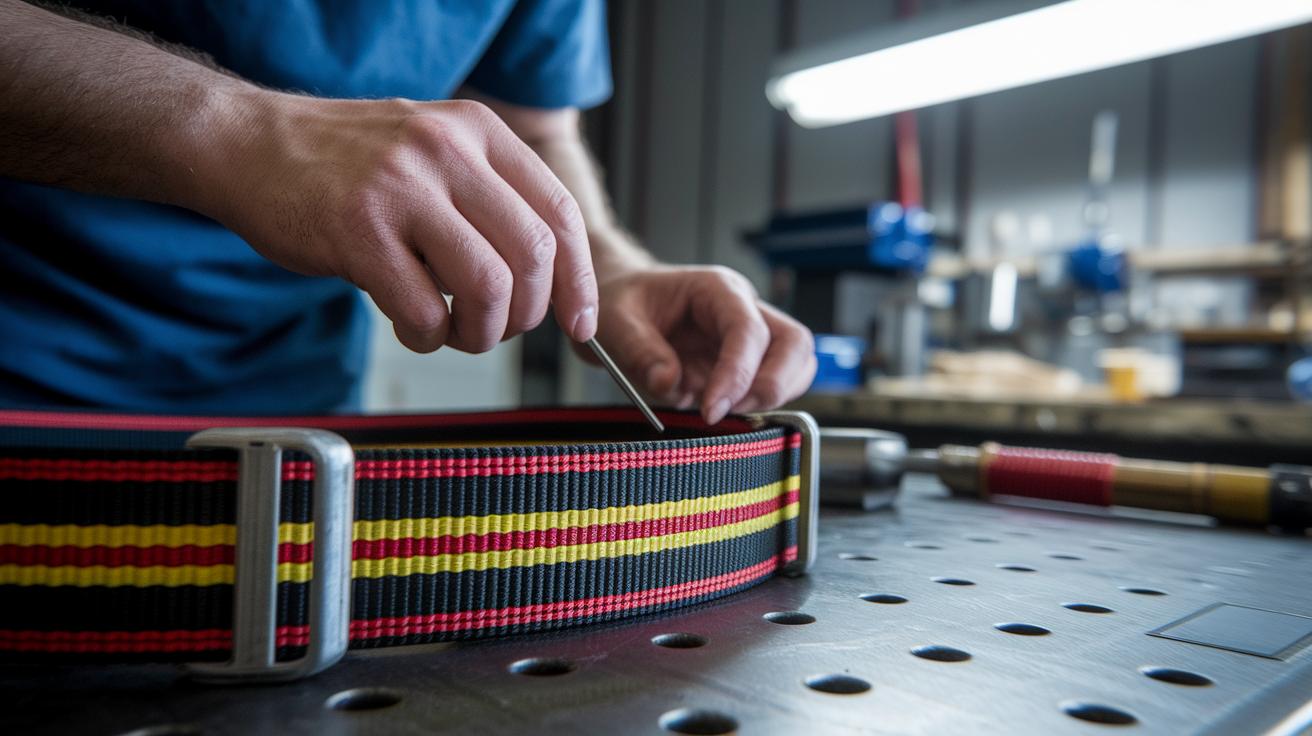
When you check your harness, examine the webbing for cuts, burn marks, fraying, and any uneven stretch. Look for signs of changes you didn’t authorize, like extra holes or swapped straps. Even a small cut can break the fibers and create a weak spot when the harness is loaded.
Now check the stitching. The threads should be tight and even with no missing or damaged parts. Poor repairs can make the harness even weaker. The table below lists common defects to look for to keep your harness working safely.
| Defect Type | Signs to Look For |
|---|---|
| Cuts | Sharp edges and separated fibers |
| Fraying | Loose fibers coming off the webbing |
| Burn marks | Discoloration or hardened fiber areas |
| Excess stretch | Webbing that is uneven or thinning out |
| Unauthorized mods | Extra holes or replaced straps |
Any of these issues can compromise your harness and put you at risk.
Evaluating Hardware Components: Buckles, Hooks, and D‐Rings on Harnesses
Metal parts in your harness take the full force when you fall. That’s why you need to check them carefully. Made of steel or aluminum, these parts must be free of dents, rust, corrosion, or cracks. They are your last line of defense during a fall, so it’s crucial they work smoothly and stay strong.
- Movement test under load – Pull on buckles, hooks, and D-rings to make sure they move freely without any wobble.
- Check for rust or pitting – Examine all metal surfaces for early signs of corrosion that could weaken the parts.
- Inspect weld points – Look closely at where parts join to ensure there are no hairline or larger cracks.
- Test latch operation – Snap hooks and buckles to confirm they lock and release without catching.
- Verify fastener security – Make sure all grommets and rivets are tight and secure.
- Check the finish – Run your hand along the metal to feel for any rough spots, burrs, or sharp edges that could cause wear or injury.
Record any defects you find immediately. Parts that show dents, rust, or damage should be marked, removed from use, and replaced right away. Keeping a log of these issues is essential for maintaining safety and reliable gear.
Verifying Tags, Labels, and Documentation for Safety Harnesses
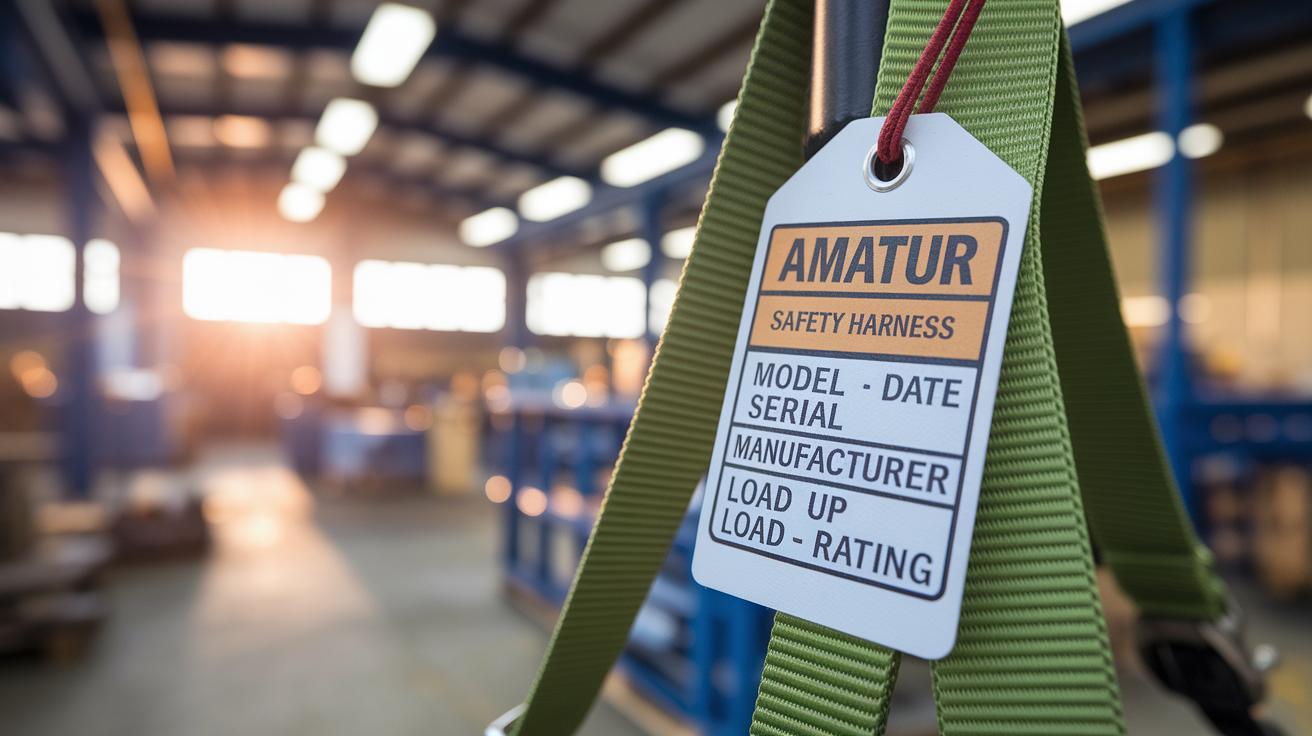
Tags keep a full record of your safety harness. They quickly show a harness’s history and condition so every piece of gear meets inspection and safety standards.
Here’s what you should check on the tag:
- Model and serial number
- Date of manufacture
- Manufacturer name and contact information
- Rated load capacity
- OSHA warning label text
During routine inspections, write down all tag details you see. Note the model number and manufacture date so you can track the gear throughout its life. If a tag is missing or becomes hard to read, replace or remove the harness right away.
Record the tag information in a standard log that shows the inspection date and inspector’s name. This makes audits faster and shows that safety rules are being followed. Keeping a good record proves the harness is safe to use and helps decide if repairs or replacement are needed, which keeps the work site consistently safe.
Cleaning, Storage, and Maintenance Guidelines for Harness Longevity
Keep your harness in top shape by cleaning and storing it properly. Dirt, chemicals, and sunlight weaken the fibers and can damage the stitching. UV rays (sunlight energy that breaks down materials) and harsh chemicals cut the life of your gear. Regular cleaning and careful storage help ensure the harness works well when you need it.
- Rinse off dirt with clean water.
- Use a mild detergent solution to clean the webbing.
- Rinse thoroughly until no soap remains.
- Lay flat or hang to dry. Avoid direct heat.
- Store in a cool, dark, and dry location.
Check your harness daily and inspect it monthly. After every use, look for signs of chemical damage or wear from cleaning. If you spot any issues or if the gear reaches its recommended service life, take it out of service immediately. Sticking to a regular maintenance schedule not only keeps your harness secure but also builds a strong safety culture on the job site.
Regulatory Standards and Record‐Keeping for Harness Inspection Compliance

OSHA 1910.140 sets safety benchmarks for personal fall arrest systems (PFAS), describing the performance standards each harness component must meet. OSHA 1926.502 outlines how often fall protection gear in construction should be inspected and maintained. These rules provide clear guidelines and build trust during field inspections. A fillable PDF checklist in both English and Spanish makes it simple to record the date, inspector’s name, inspection results, and any corrective actions.
| Standard | Key Requirement |
|---|---|
| 1910.140 | Performance criteria for PFAS components |
| 1926.502 | Guidelines on inspection and maintenance frequency for fall protection |
| Recordkeeping | Log date, inspector, findings, and corrective steps |
Regular audits are key to keeping your job site safe. Follow the inspection schedules set by OSHA and your own safety guidelines. Securely store completed forms and review them at the start of every shift to catch any issues before work begins. This solid approach to recordkeeping meets regulations and builds trust by clearly showing that every harness has passed its required checks.
Regulatory standards and recordkeeping
Switch to a digital, fillable PDF checklist for your safety harness inspections. This form comes in English and Spanish so you save time on manual entries while keeping your records consistent. For example, you might record: "Inspector: Alex; Date: 10/1/2023."
| Field | Description |
|---|---|
| Inspector and date | Who did the check and when |
| Component checkboxes | Items like webbing, stitching, and hardware |
| Pass/Fail indicators | Pass or fail marks with space for comments |
| Signature and approval | Space for signing off the inspection |
This digital audit form captures important inspection details right away, making compliance easier. You can also customize it with extra fields to meet your company’s internal protocols and standards.
Final Words
In the action, you kick off a careful routine by checking webbing, stitching, hardware, tags, and proper cleaning procedures both before and after using your gear. Our guide breaks down each step, from spotting defects to logging details for OSHA audits, so you know exactly what to look for. By following this safety harness inspection checklist, you'll keep your gear in top shape and your work site safe. Keep these steps handy, stay on track, and enjoy a secure, confident working environment.
FAQ
Where can I find free downloadable safety harness inspection checklists?
The free downloadable checklists are available in multiple formats such as Word, PDF, Excel, and DOC from online safety resources. They help ensure you follow pre- and post-use inspection procedures.
How do you inspect a safety harness?
The inspection process checks the harness webbing and stitching for cuts, frays, or burns, tests hardware like buckles and D-rings for proper operation, and verifies tags, lanyards, and documentation.
What should be included in a safety inspection checklist for a harness?
A comprehensive checklist includes a visual scan for webbing defects, review of stitching, hardware function tests, legible tag verification, lanyard integrity check, load rating confirmation, cleaning status, and proper documentation.
How often do safety harnesses need to be inspected?
The inspection should occur before and after each use, with additional monthly checks and audits as required by OSHA and company safety standards to maintain compliance and safety.
Which harness components must be inspected?
Key components to inspect include the full-body harness webbing and stitching, hardware elements like buckles, hooks, and D-rings, accompanying tags and labels, lanyards, and any connectors ensuring proper load ratings.