

Ever wonder if your trim carpentry project might end up costing more than you planned? Many homeowners often get surprised when material, paint, and labor costs add up fast.
This guide lays out every expense, from basic trim options to custom work. Think of it like checking a price tag before you grab a tool. Follow these budget tips and you'll be ready to keep your project on track and within your budget.
Complete Trim Carpentry Cost Breakdown
Trim material costs vary a lot based on the type and style you pick. Basic trim can run as low as $0.50 per linear foot (about $0.50 per 0.3048 m), while fancier or custom profiles may cost up to $10 per linear foot (roughly $10 per 0.3048 m). That price covers only the trim. Adding paint or stain adds another $1 to $4 per linear foot.
Labor is another major part of the expense. Professional carpenters usually charge $75 to $125 per hour. For smaller projects, some charge by the linear foot, with rates around $5.70 to $9.00 for standard work. If you're replacing old trim, expect removal fees of $50 to $150 per room or about $0.60 to $1.20 per linear foot. Also, budget an extra 10% to 15% for waste, cuts, and any wall repairs or prep work needed before installation.
| Item | Cost |
|---|---|
| Trim material | $0.50 to $10 per linear foot |
| Painting/Staining | $1 to $4 per linear foot |
| Trim removal | $50 to $150 per room or $0.60 to $1.20 per linear foot |
| Labor | $75 to $125 per hour or $5.70 to $9.00 per linear foot |
| Extra materials & prep work | Add 10% to 15% |
Understanding these costs helps you plan your project and avoid surprises. Whether you go with a basic finish or a high-end trim, sticking to these ranges can keep your project both polished and practical.
Trim Material Price Guide
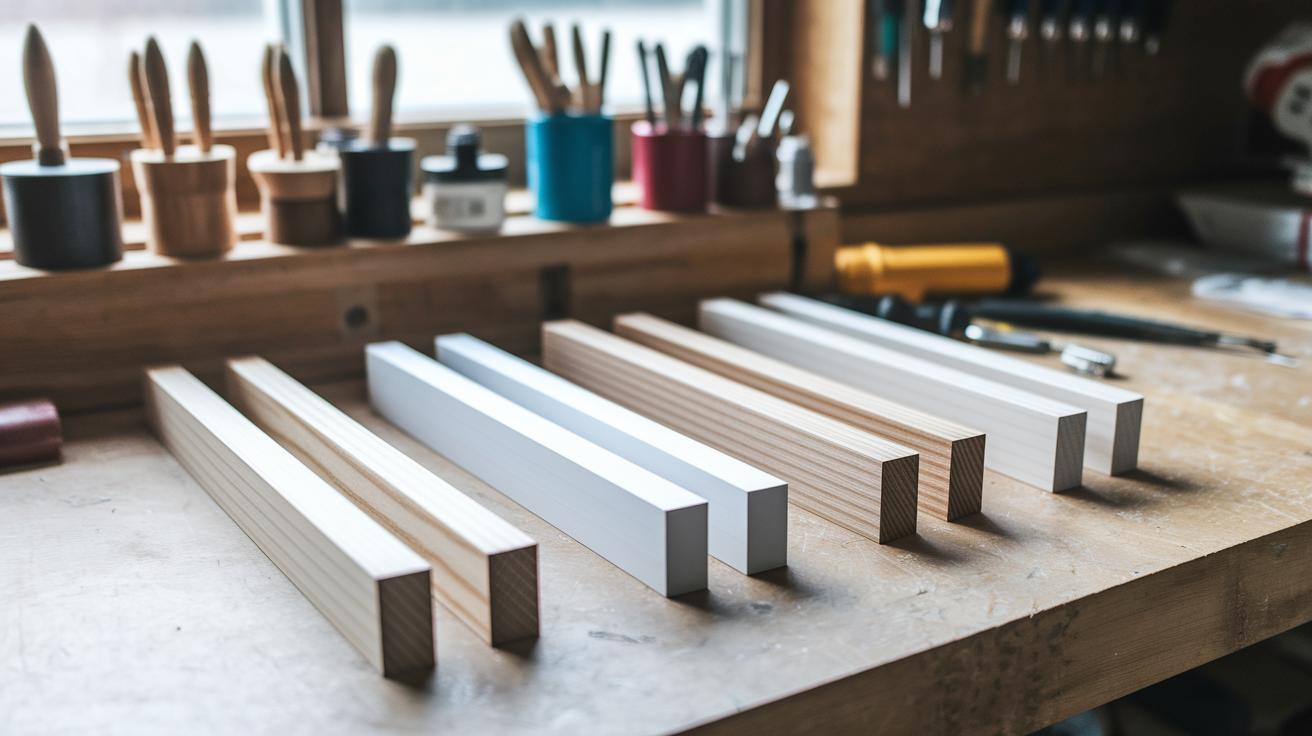
Your choice of trim depends on both your design goals and your budget. MDF (medium-density fiberboard, a versatile engineered wood) offers an affordable pick at about $0.50–$1.20 per linear foot (approximately $0.50–$1.20 per 0.3048 m).
If you need trim that resists moisture, go with PVC trim. It usually costs about $1–$2 per linear foot (around $1–$2 per 0.3048 m). For a traditional or natural look, solid wood like oak or maple gives you a durable finish at roughly $2.50–$5.00 per linear foot (about $2.50–$5.00 per 0.3048 m). And if you want a custom, ornate design, bespoke moldings can cost more than $10 per linear foot (over $10 per 0.3048 m).
| Material type | Cost per linear foot |
|---|---|
| MDF | $0.50–$1.20 |
| PVC | $1–$2 |
| Solid wood (oak, maple) | $2.50–$5.00 |
| Custom/ornate moldings | Exceed $10 |
Pick the trim material that fits your needs and budget. If you like a modern, understated style, MDF or PVC works well. But if you want to boost your home’s value with a high-end finish, investing in premium solid wood or custom moldings might be the answer. Just be sure to factor in any extra installation or finishing costs.
Labor Charges for Finish Carpentry
Finish carpentry labor cost is now part of the full trim carpentry breakdown. This guide shows the differences in skill levels and explains when to charge by the foot or by the hour. All rates match the details used in other sections.
Standard vs. Master Carpenter Rates
Standard installers often charge $30–$70 per hour for routine work. Master carpenters charge $100–$200 per hour because they use advanced techniques for custom profiles and precise cuts. In some areas, a master carpenter’s hourly rate may cost nearly three times as much as a standard installer due to years of experience and expert workmanship.
Linear Foot vs. Hourly Pricing
For simple trim jobs, pricing is usually by the linear foot at rates of $5.70–$9.00 per foot. When a project involves unusual angles or a lot of custom work, contractors use hourly rates to cover extra time and adjustments. Imagine installing 50 ft (15.2 m) of molding under steady conditions, the fixed per-foot rate makes cost calculations clear and simple.
Additional Trim Installation Expenses

Costs for painting, staining, and removing old trim are covered in the Complete Trim Carpentry Cost Breakdown. Keep in mind that wall prep work can bump up your expenses. Minor wall repairs and patching may run a few hundred dollars, depending on the scope of your project. For example, fixing small wall imperfections with patch compound before installing new trim creates a smooth surface and a reliable finish, but it can add several hundred dollars when multiple areas need work.
Regional Price Variations for Trim Carpentry
Prices for trim work change based on where you live. For example, in Dallas, finish carpentry usually costs around $5.25 per linear foot (about $17.21 per meter). In big coastal cities and major metro areas, prices can be 10% to 20% higher than average. Meanwhile, rural regions can see prices 5% to 15% lower. These differences come from local labor rates, how easily you can get materials, and the overall economy in your area.
Urban vs. Rural Pricing
City areas tend to have higher labor costs and stricter building codes. Contractors in busy urban settings often deal with higher travel and scheduling costs, which drives prices up. In rural areas, there’s less demand and lower daily expenses, so the prices stay more affordable.
High Cost-of-Living Impact
In places where living costs are high, both labor and material prices go up. Areas with booming construction markets charge extra to cover higher wages and operating costs. This means homeowners in those regions may pay more per linear foot compared to areas where the cost of living is lower.
Real-World Trim Carpentry Project Example
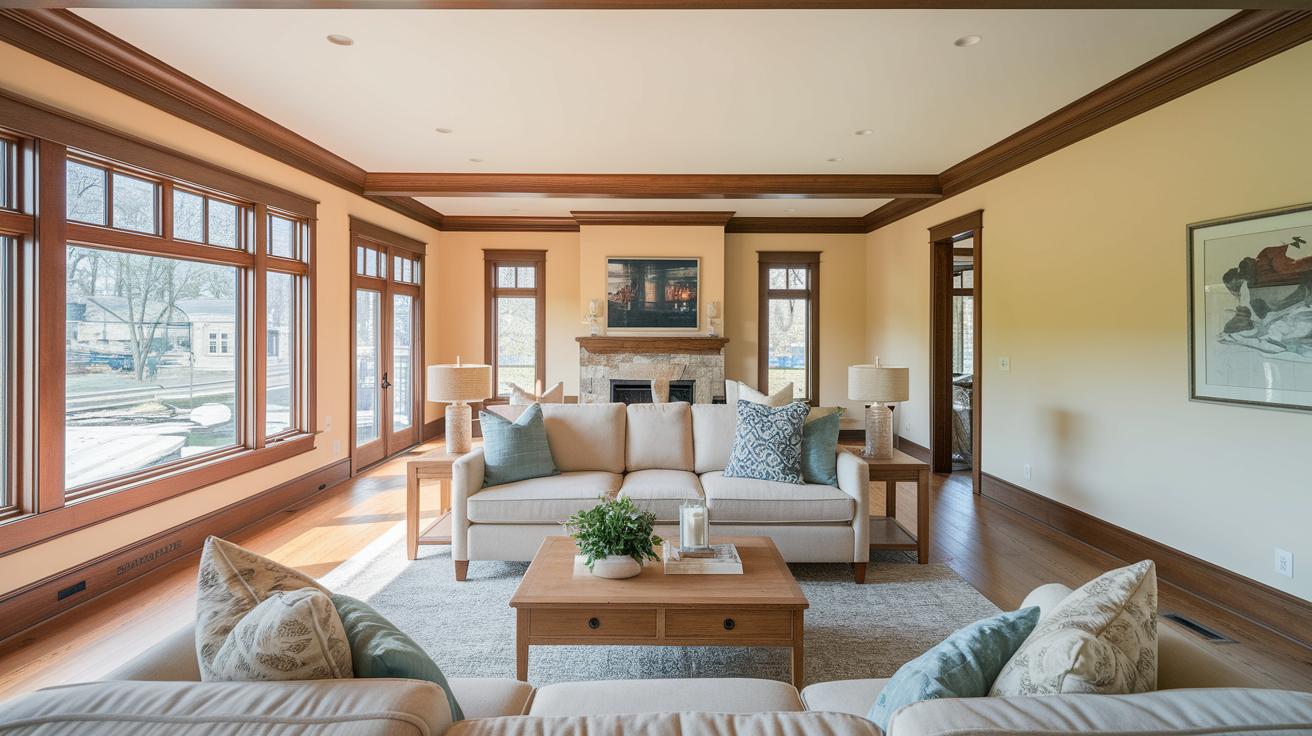
A 2,300 sq ft (213.7 m²) ranch in Oak Park is a great example of trim carpentry work done right. In this project, baseboard and crown molding were added to boost the home’s look. We installed 740 linear feet (225.6 m) of baseboard to create a strong wall base and 124 linear feet (37.8 m) of crown molding to bring extra style to the rooms. This case shows how choosing the right materials and planning labor can shape your entire budget. One homeowner said, "Seeing the transformation in just a few days was impressive, and it proved that a well-planned project keeps surprises at bay."
Project Scope & Measurements
The house covers 2,300 sq ft (213.7 m²) in Oak Park. It features 740 linear feet (225.6 m) of baseboard and 124 linear feet (37.8 m) of crown molding, making a total of 864 linear feet (263.4 m) of installed trim. Measurements were taken carefully, with an extra 10% material added for any mis-cuts or adjustments. This extra allowance helps ensure every room gets a neat, continuous look.
Cost Summary
The materials cost $1,568 while skilled labor came to $4,542, making the total project cost $6,110. This clear breakdown shows that careful planning and accurate measurements can keep your trim carpentry project on target and within budget.
Cost Optimization and Budgeting Tips for Trim Projects
Keep your trim project on budget by choosing simple profiles. Instead of going for intricate designs, pick standard shapes like quarter round or plain base molding. Simple profiles are easier to install and cost less, which cuts both your material and labor expenses. A plain base molding simplifies the job and minimizes costly custom work.
Save more by opting for affordable materials. MDF (medium-density fiberboard, a type of engineered wood) and PVC trim are great choices. They give your project a neat look similar to premium solid wood but at a much lower price. These materials offer a durable finish without stretching your budget.
Fix minor damage instead of replacing all the trim. Patch up small dents or chips on the existing trim to avoid the full cost of new material and extra labor. A quick DIY paint touch-up after installation can save you an extra $1–$4 per linear foot. Small repairs and personal finishing touches keep your trim looking sharp while keeping expenses low.
Frequently Asked Questions on Trim Carpentry Costs

Q1: What is the average cost per linear foot?
A basic trim job usually costs around $7 per linear foot. That price is for standard materials and finishing work, but it can change based on the specifics of your project.
Q2: What factors shape trim pricing?
The price for trim work depends on several things. It includes the type of material, how complex the trim design is, whether labor is charged by the hour or by the foot, local cost differences, and any prep work needed. For example, a decorative trim that involves extra wall repair will likely cost more.
Q3: How do DIY and professional installations compare?
Doing it yourself can save money on labor, but it might take longer and waste additional material if mistakes happen. Professionals typically work faster and reduce errors, which means less time fixing issues. For instance, one DIY project needed extra cuts that led to more waste, while a pro kept delays to a minimum.
Q4: How should waste be factored into budgeting?
When planning your budget, add a 10%–15% material contingency along with a 5%–10% overall project contingency. This extra budget helps cover any unexpected cuts or minor repairs. For example, if your material cost is $100, plan on spending another $10 to $15 to cover any waste.
Final Words
In the action, you saw how a trim carpentry cost guide breaks down material, labor, and additional expenses. We explored price ranges for moldings, the impact of regional differences, and a real-world project example that ties it all together.
Each section offered clear tips, from cost-saving choices to budgeting for errors, to help plan a trim project that feels achievable. Tackle your next project with confidence, knowing you have a solid roadmap to save time and money.
FAQ
What is the typical cost per linear foot for trim carpentry?
The average trim cost ranges from $0.50 to $10 per linear foot for materials, with labor around $5.70 to $9.00 per linear foot and finishing work adding $1 to $4 per linear foot.
How do you calculate the cost to trim a 2000 sq ft house?
Calculating trim cost for a 2000 sq ft house involves measuring total linear feet, then multiplying by material, labor, and finish prices while considering removal or repair fees and regional pricing variations.
How much do trim carpenters charge and what factors drive pricing?
Trim carpenters charge by the hour (typically $75–$125) or per linear foot. Pricing depends on material type, trim design complexity, installation method, regional rates, and any extra services like removal or painting.
What factors should be considered when budgeting for trim work?
Budgeting for trim work requires factoring in material and labor costs, finish expenses, and an extra 10%–15% for waste, along with potential costs for prep work, repairs, or removal of old trim.