

Have you ever thought your scaffolding might be the weak spot on your work site? OSHA rules are not just advice; they keep every part of your setup strong and safe. These standards have helped save lives and avoid costly accidents for many years. In this article, you’ll learn how using fall protection for heights above 10 ft (3 m) and ensuring that load limits are met are key to keeping your site secure. Follow these proven tips to protect yourself and your crew on every project.
OSHA Scaffolding Requirements: Secure & Trusted Practices

OSHA’s scaffolding rules (29 CFR 1926.451) set the legal guidelines for keeping construction sites safe. These rules help stop falls and structural failures by making sure every scaffold part can handle heavy loads. In 2023, these standards were among the top-10 most cited, and they require fall protection for workers working above 10 ft (3 m). This helps create a consistent safety level for everyone on the job.
Key scaffold checks include:
- Fall protection for anyone working above 10 ft (3 m)
- Guardrails on platforms made after January 1, 2000 with a toprail height of 38–45 in (97–114 cm)
- Complete planking or decking of scaffold platforms
- Secure midrails set 20–30 in (51–76 cm) above the platform
- Toe boards along open edges of the scaffold
- Components that can support 4x the maximum load expected
- Level footings that safely pass the weight of the scaffold
- Tie-off and stabilization using guys, ties, or braces when the scaffold rises above one frame
- A competent person must visually inspect the scaffold before each shift
- All scaffold workers must get thorough safety training
Following these rules not only cuts the risk of falls and injuries but also helps you avoid fines and legal issues. Stick to these criteria to keep your work area safe and your scaffold built to trusted, rigorous standards.
Design and Construction Standards in OSHA Scaffolding Requirements
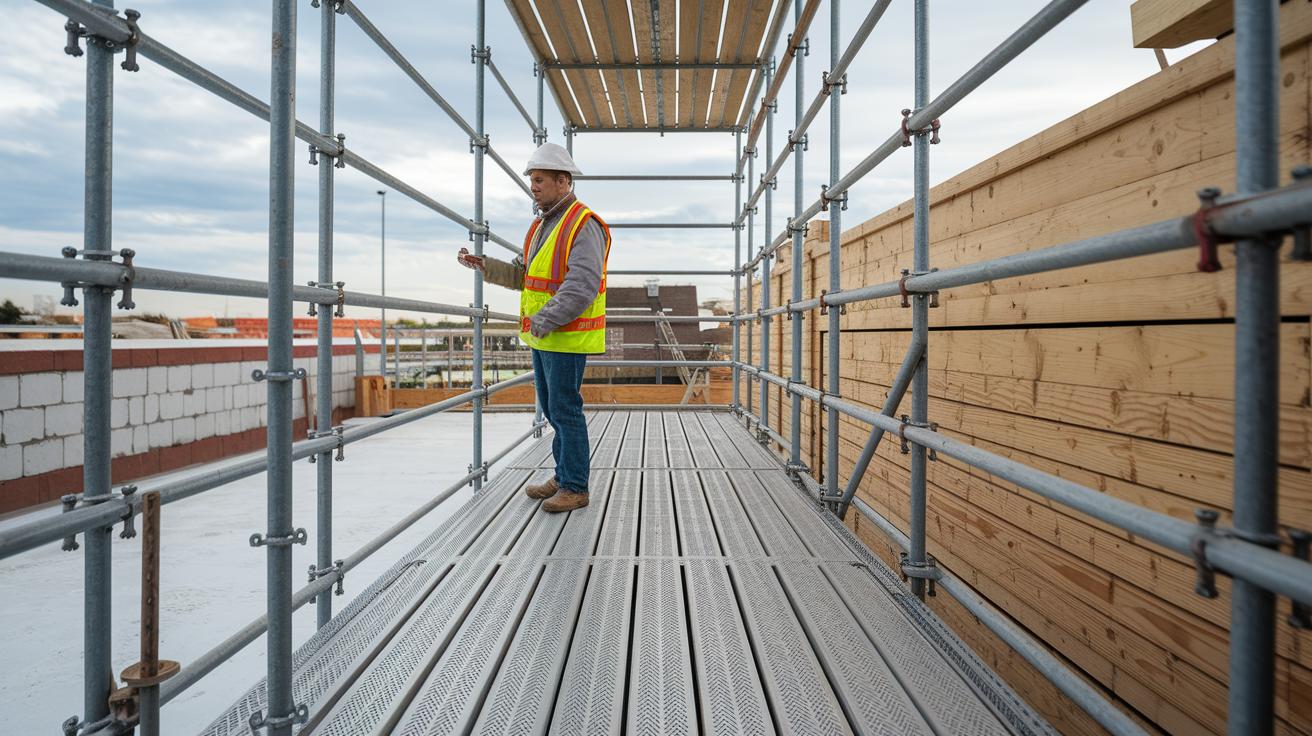
OSHA lays out clear rules for putting together scaffolds so everyone stays safe on the job. The scaffold’s base, or footings, must be level and strong enough to hold all the weight by using base plates and mud sills (wood blocks placed on the footing). Cross-bracing keeps the structure steady, and top rails should be installed between 38 in (97 cm) and 48 in (122 cm) above the platform to help prevent tipping. Scaffolds are built to hold up to 4 times the maximum load they will carry. Plus, the platform must be fully covered with boards and equipped with firm guardrails and toe boards (raised barriers at the edge) to help stop falls.
| Component | OSHA Requirement |
|---|---|
| Footings | Must be level and strong enough to carry the full load by transferring weight with base plates and mud sills |
| Cross-Bracing | Top rails need to be placed 38 in (97 cm) to 48 in (122 cm) above the work platform |
| Load Capacity | Scaffolds should support 4 times the maximum load expected |
| Platform Decking | Must be fully planked or decked and fitted with secure guardrails |
| Toe Boards | Should be installed along open sides to prevent falls |
Builders need to follow these specific steps when assembling platforms. Check each part, from the level footings to the secure toe boards, to make sure everything is in place. Following the building equipment safety manual’s instructions helps the scaffold hold up even under tough conditions and keeps the work area safe for everyone.
Fall Protection Guidelines in OSHA Scaffolding Requirements

OSHA states you must use fall protection when working 10 ft (3 m) or more above the ground. This rule covers any scaffold, whether you rely on guardrails or personal fall arrest systems. It applies to new setups, older constructions, and even suspension scaffolds.
- Use fall protection on every scaffold taller than 10 ft (3 m).
- For scaffolds built after January 1, 2000, install guardrails that are 38–45 in (97–114 cm) high. Older setups should have guardrails between 36–45 in (91–114 cm).
- Place midrails 20–30 in (51–76 cm) above the platform.
- Suspension scaffolds must include a full guardrail system or a personal fall arrest system.
- All guardrails and midrails should run continuously without any gaps.
- Keep fall protection gear secure by inspecting it regularly.
Following these clear guidelines and checking your equipment often keeps your job site safe and up to OSHA standards.
Scaffold Inspection and Maintenance Procedures in OSHA Scaffolding Requirements

A qualified person must inspect the scaffold at the start of every shift and after any event that might weaken its structure. These daily checks help uncover damage or wear on the platform surfaces, braces, ties, and other parts that hold the scaffold together. Carry out a complete inspection and document it immediately to fix any hazards without delay. Using a clear safety checklist ensures every step is covered and any issues are addressed before work starts again. This hands-on routine not only keeps the scaffold safe but also reinforces overall site safety.
- Check the planks and decking for cracking, splintering, or other signs of wear.
- Inspect guardrails, midrails, and toe boards to be sure they are securely attached.
- Make sure the footings (base supports) are level and stable.
- Review the braces, ties, and hangers to confirm they hold proper tension and are in good shape.
- Confirm that the cross-bracing is installed correctly.
- Look for any rust, corrosion, or warped metal parts.
- Test the locking devices on any adjustable parts to ensure they work properly.
- Identify and document any loose, damaged, or missing hardware.
Recording these checkpoints regularly helps maintain a safe work environment and guides timely repairs. By performing daily scaffold evaluations and periodic safety checklist reviews, your team can quickly fix problems and keep elevated work platforms in top shape.
Essential Tie-Off and Stabilization Procedures in OSHA Scaffolding Requirements
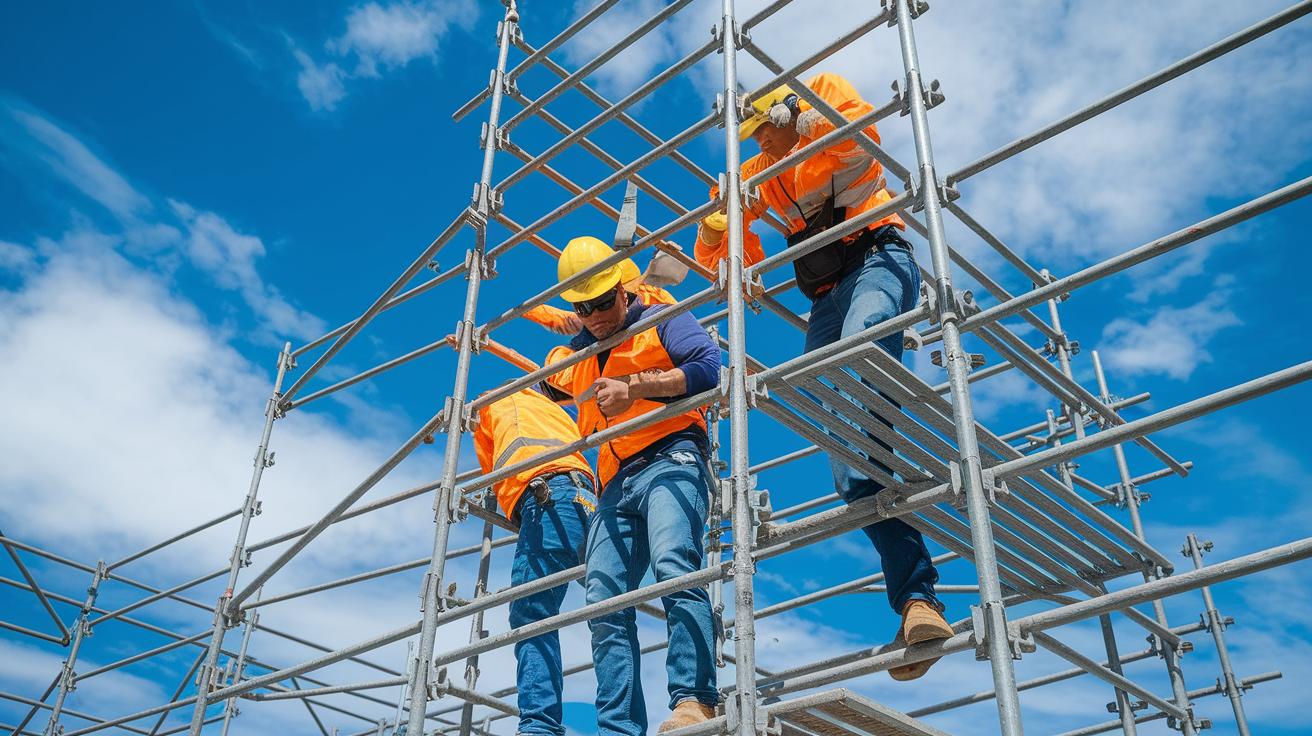
When working with scaffolds, safety is the top priority. OSHA requires that any scaffold taller than one frame must be secured with proper tie-off methods. Tie-off means using guys (support cables), ties, or braces to keep the structure steady as you build it. The first vertical tie-off should be placed at a distance equal to four times the scaffold’s base width. For example, if your base is 5 ft (1.5 m) wide, secure the scaffold 20 ft (6.1 m) from the base. Adding outriggers (extensions attached to widen the base) like 30-inch (2.5 ft or 0.76 m) units on each side lets you push that distance even further, lowering the chance of tipping. For movable towers where a direct tie-off is hard to achieve, expanding the base is a smart way to meet OSHA’s requirements while keeping the structure secure.
Securing your scaffold is key to preventing falls and ensuring safety at elevated work sites. Choose the right method for your project. OSHA-approved tie-offs include:
- Wall ties
- Clamps
- Anchors
- Outriggers
Using these options consistently not only meets OSHA standards but also creates a safe work environment for everyone on the job.
Training, Certification, and Competent Person Role in OSHA Scaffolding Requirements

Employers must make sure every worker who builds or uses scaffolds gets hands-on training to spot hazards and follow safety rules. The training breaks down each step in setting up scaffolds and covers what to do in emergencies. A well-trained team lowers risks on the job, and clear instructions help everyone know their role when working on high platforms. Workers learn to avoid falls, use fall protection gear, and check scaffolds every day. For example, start by saying, "Always check your platform’s stability before you begin work."
A competent person is crucial because they inspect the scaffold before every shift. This person is not only certified but also skilled in spotting dangers and making quick repairs. Certification courses teach hazard recognition, proper ways to put together and take apart scaffolds, and emergency rescue tips. Key training topics include:
- Hazard recognition
- Proper assembly and disassembly
- Fall protection systems
- Emergency rescue procedures
- Equipment inspection protocols
Structured safety training courses are essential for meeting OSHA rules. These courses build clear, practical skills that protect both workers and property. When training is solid, every employee grows confident in handling the equipment, and the competent person steps up as the safety leader on site. This approach makes sure that everyday tasks and unexpected events are met with quick, proper action, a key step in keeping work sites safe and in line with OSHA standards.
Compliance, Documentation, and Common Violations in OSHA Scaffolding Requirements

Not following OSHA’s scaffolding rules can cost employers big fines and legal trouble. In 2023, inspectors often found issues like missing fall protection for work done above 10 ft (3 m), no guardrails on platforms, wrong tie-off methods when scaffolds go above one frame, and skipped daily checks. These problems put workers at risk and boost legal exposure. Employers must follow local permit rules for platforms and keep thorough on-site records of training and fixes.
Good recordkeeping is key. Record every inspection, training session, and repair step to show you meet OSHA standards. A clear documentation system makes it easier to catch issues and avoid heavier penalties.
| Violation | Citation Frequency (2023) | Potential Penalty |
|---|---|---|
| Missing fall protection | High | Severe fines |
| Absent guardrails | High | Significant fines |
| Improper tie-offs | Moderate | Substantial fines |
| Skipped inspections | Moderate | High penalties |
Employers should enforce strict safety rules and keep detailed records. Regular audits of scaffolding setups and training logs help spot problems fast and keep the worksite safe and compliant.
Final Words
In the action section, we broke down OSHA scaffolding requirements from design standards to fall protection guidelines, inspection routines, tie-off methods, and essential training. We unraveled complex rules into clear, step-by-step instructions, practical lists, and helpful tables to guide you through each safety measure.
This guide builds the confidence to handle your projects while keeping safety and budget in check. With these tips, you’re on track to meet all osha scaffolding requirements and finish your project safely and efficiently. Enjoy building smart.
FAQ
How can I access OSHA scaffolding requirements in PDF format?
The OSHA scaffolding requirements PDF offers downloadable guidelines detailing design, construction, and safety practices. These documents help ensure compliance with setup and use standards on the job site.
What are OSHA scaffolding inspection requirements?
OSHA scaffolding inspection requirements state that a competent person must inspect the scaffold before each shift and after any incident, checking for defects in platforms, bracing, ties, and other key components.
Where can I find an OSHA scaffolding fact sheet?
The OSHA scaffolding fact sheet compiles core safety mandates like fall protection, guardrails, and load capacities into one quick reference, helping users quickly review essential compliance details.
What are the OSHA scaffolding requirements for general industry, including 1910 standards?
OSHA scaffolding requirements for general industry (1910) address safety measures such as secure construction, fall protection, and load-bearing standards, ensuring safe practices across various work settings.
What training is required for OSHA scaffolding safety?
OSHA scaffolding training requires that workers and competent persons learn hazard recognition, proper assembly/disassembly, fall protection, and emergency rescue procedures to maintain a safe work environment.
What are the OSHA guidelines for scaffolding?
The OSHA guidelines for scaffolding establish standards for fall protection, secure platforms with guardrails and midrails, and load capacity requirements, all aimed at reducing risks and ensuring structural safety.
What is the 3 to 1 rule for scaffolding?
The 3 to 1 rule for scaffolding indicates that a cantilevered scaffold may extend one foot for every three feet of its height, ensuring proper stabilization and reducing the risk of overextension.
What are the essential requirements of scaffolding?
The essential requirements of scaffolding include stable platform decking, secure guardrails with midrails and toe boards, adequate load capacity, effective fall protection, and thorough inspections by a qualified person.
What are the three most common scaffolding violations?
The three most common scaffolding violations involve missing fall protections, inadequate guardrails, and improper tie-offs, all of which lead to higher risks of accidents and potential enforcement actions.