

A short safety talk could save a life. Nearly one in five construction deaths might be prevented with a quick safety meeting. This guide shows you how to start meetings with clear and engaging topics that keep your team safe and ready for the day. With simple facts and real-life examples, you can turn routine talks into vital steps for a safer worksite.
Construction Safety Meeting Topics: Energize Your Crew

Begin your safety meetings with topics that grab your crew's attention and keep them safe. Nearly 20% of worker deaths in private industries occur in construction. That makes these brief briefings a vital part of your workday. You can cover several topics in one meeting or focus each session on one issue such as PPE (personal protective equipment), equipment checks, or emergency steps. For example, try starting with a fact like, "Regular safety meetings can lower accidents by 25%." This simple fact can spark interest right away.
Plan your onsite safety briefing with clear examples and steps. Use this checklist to guide you:
- PPE use, from hard hats to full-body suits
- Clear equipment inspections to catch problems early
- Lockout-tagout steps to turn off power for safe maintenance
- Hazard recognition tips to spot risks on the spot
Set up your project safety update sessions with a simple structure. Check resources like construction site safety guidelines at https://neull.com?p=115 to be sure your meetings follow the best practices on the job.
Keep the discussions practical and interactive. Ask team members to share real experiences that show why each safety topic matters. This not only builds strong safety habits but also makes your crew active participants in creating a safer work environment.
Construction Safety Meeting Topics: Hazard Identification & Risk Assessment

Start your meeting by discussing how to spot hazards before work begins. Explain that hazard identification means finding potential risks like loose structures, unguarded edges, or dangerous substances early. For example, mention a time when a crew member discovered a missing guard on a power tool before starting work, which saved the project from costly injuries.
Hold a daily session where you and your team walk the jobsite and look for risks. Ask everyone to share what they notice, such as odd chemical smells, cracks in concrete, or unexpected clutter. This routine makes risk assessment a team effort while boosting overall site safety.
Break down risk assessment into simple steps:
- Walk through all work areas at the start of the shift.
- Spot any risks that could affect the crew.
- Talk about how each hazard might impact the job.
- Agree on quick actions to manage or remove the danger.
Finish with a quick chat where each team member names one hazard they saw during the review. This daily check keeps your hazard assessment straightforward and catches site-specific dangers early, making sure your project stays safe and in line with regulations.
Construction Safety Meeting Topics: PPE & Equipment Safety
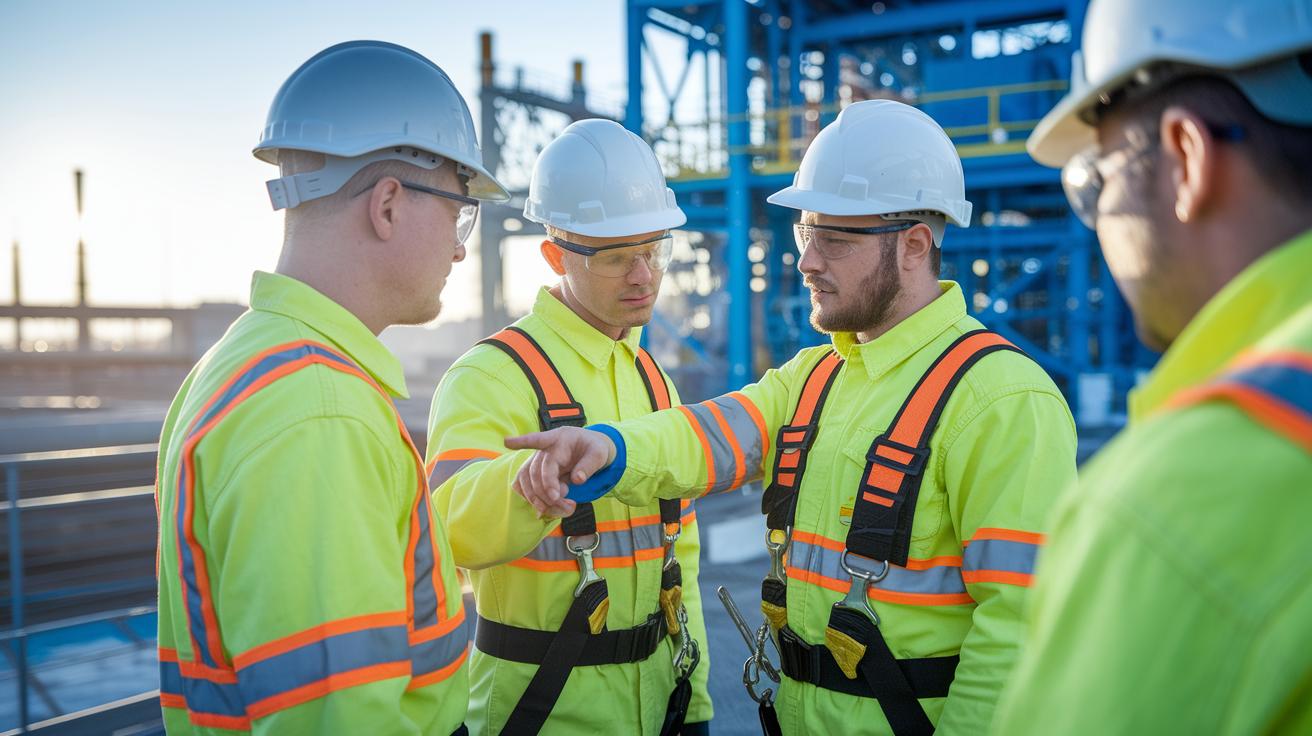
Begin your meeting by reviewing personal protective equipment (PPE) use with clear, real-world examples. Tell your team, "Before starting work, check your hard hat and full-body suit. One crew member found a worn harness strap that could have failed if he fell."
Next, talk about equipment safety using this simple checklist:
- Check power tools (like drills and saws) to make sure cords are secure and there are no loose parts.
- Make sure tools are free of debris that could cause problems.
- Confirm that safety guards on tools are properly in place.
- Inspect other parts such as emergency stop buttons and wheel coverings on heavy machines. For example, one inspection caught a power saw with a non-responsive emergency stop before it was used, which stopped a possible injury.
Review your lockout-tagout procedures. Explain that these steps ensure machines are turned off and cannot restart by accident during maintenance. Share a story like, "A proper lockout on a faulty press stopped a serious injury by preventing an accidental restart."
Run through these key steps in your meeting:
- Inspect and verify PPE before using it.
- Perform a detailed equipment check with the checklist.
- Test power tools for proper maintenance and emergency functions.
- Apply lockout-tagout procedures when servicing equipment.
Encourage team members to discuss their own experiences and stress that using these practices helps keep everyone safe while reducing downtime from unexpected equipment problems.
Construction Safety Meeting Topics: Fall Protection & Ladder Safety

Falls make up nearly half of all on-the-job injuries and cause more than one-third of fall-related deaths in construction. Start the meeting with a clear fact such as, "Did you know 81% of ER-treated falls involve a ladder?" This grabs attention and sets the stage for discussing how to prevent falls.
Focus your session on safe ladder practices. Remind everyone that they must be trained to choose the right ladder, set it up on even ground, secure it properly, and always keep three points of contact. For instance, you can say, "Always face the ladder when climbing and grip it with both hands." This simple advice helps build safe habits.
When reviewing roof work safety, stress the importance of personal fall arrest systems (safety harnesses, lanyards, and anchor points). These tools are crucial in preventing serious injuries when working high up. One quick example: a team member once avoided a dangerous fall simply by double-checking his harness.
Review these key steps with your crew:
- Inspect ladders for any defects before each use.
- Set up and position ladders correctly.
- Check that all fall arrest gear fits well and is in good condition.
- Run regular drills to practice handling fall scenarios.
By sticking to these safety guidelines, your crew will stay better prepared, lower risks, and work in a safer environment.
Construction Safety Meeting Topics: Emergency Response & Incident Management

Kick off your meeting by stressing the need for well-practiced emergency drills. Quick and coordinated action during a crisis can save lives. OSHA requires a trained person on-site for first aid, so review simple first aid steps and remind each team member to check the first aid kit. Also, schedule regular CPR refreshers every three months.
Talk about how on-site training boosts everyone's confidence during emergencies. When everyone knows the plan, the team can act fast. For example, mention how during a drill your crew safely evacuated a simulated chemical spill without panic.
After any incident, set aside a few minutes for a debrief. This helps the team understand what happened, share feedback, and update the plan if needed. Here are some key steps:
- Run regular emergency drills.
- Hold quick first aid review sessions.
- Debrief immediately after any incident.
- Set up a near-miss report system for team members to share hazards they almost encountered.
Open discussion through this reporting system can cut future risks and help improve safety on your worksite.
Construction Safety Meeting Topics: Regulatory Compliance & OSHA Protocols

Start your meeting by outlining OSHA rules and protocols for everyone. Remind your team that following OSHA standards is vital for keeping the work site safe. Electrical safety, in particular, deserves extra focus since construction workers are about four times more likely to be electrocuted than workers in other fields. For example, you might say, "Always de-energize equipment using lockout-tagout procedures before doing any maintenance." This simple reminder can prevent serious accidents.
Next, stress the need for regular compliance walk-throughs and audit meetings. These sessions help ensure every part of your operation meets current safety standards. One thorough equipment review, focusing on proper lockout-tagout practices, once caught a fault early and prevented a potential electrocution. Using a checklist for these reviews can keep the process quick and thorough.
Keep your team updated with the latest OSHA changes. Review new safety standards and mandatory training in briefings. Share additional resources such as construction safety training so everyone can learn about upcoming programs. Remind your crew that staying current not only meets legal requirements but also makes the job site safer for all.
Run through these key steps in your compliance meetings:
- Conduct regular OSHA walk-throughs.
- Schedule periodic audit and compliance meetings.
- Update the team on the latest safety standards.
- Reinforce lockout-tagout procedures to prevent electrical hazards.
Following these steps builds a strong safety culture and keeps your site fully compliant with OSHA regulations.
Construction Safety Meeting Topics: Fostering Safety Leadership & Culture

Start your safety meeting by asking a simple question: "What safety change made the biggest impact on your work?" This simple question sparks honest talk and gives everyone the chance to share ideas. Explain that a strong safety culture means every person is in charge, from quick toolbox talks to sharing tips in suggestion forums.
Invite a team member to lead a short session on a personal safety win. For instance, you might say, "Last week, a crew member shared a tip about ladder use that helped avoid an accident." Sharing these stories shows that safety is part of our daily work and builds commitment.
Set aside a few minutes in each meeting for everyone to suggest one safety improvement. Try rotating the role of meeting leader each week. Ask questions like, "What’s one safety habit you rely on?" This gives everyone a stake in keeping the job site safe, boosting morale and lowering injury risks.
These leadership talks not only involve every team member but also help everyone react fast to hazards. When you weave proactive safety habits into everyday work, you build a safer environment for every crew member. Safety first is the key to success.
Construction Safety Meeting Topics: Routine and Specialized Briefing Sessions

Each day, take a few minutes to check the site for risks. Gather your team and ask, "Did anyone see any loose equipment near the danger zones?" This daily check helps catch issues early.
Every week, meet to review any incidents and discuss safety. For example, you might say, "After last week's close call, please make sure all guardrails are tight." These talks keep safety habits strong.
When the season brings new challenges, add a special safety topic to your meeting. In the summer, remind everyone, "Stay hydrated and take breaks to avoid heat stress." This ensures everyone stays safe as conditions change.
Final Words
In the action, this guide showcased practical tips on setting up comprehensive construction safety meeting topics. We covered hazard identification, PPE checks, fall protection, emergency response, compliance, and safety culture. Each section builds your plan for effective, regular briefings to reduce on-site risks.
Keep these steps and reminders in mind as you plan your next project. With clear focus and proper planning, you'll ensure your team stays safe and projects run smoothly.
FAQ
Frequently Asked Questions
What free printable safety meeting topic PDFs are available?
The free printable PDFs compile extensive lists, including 100 daily toolbox topics and construction safety topics, giving you ready-to-use resources to drive effective, consistent on-site briefings.
How do OSHA safety topics, including OSHA 10 mandatory topics, guide construction site safety?
OSHA safety topics for construction cover key areas such as fall protection, electrical hazards, and PPE. OSHA 10 mandatory topics focus on essential skills to recognize risks and maintain compliance on the job.
What are good safety topics and the best subjects for a construction safety meeting?
Good safety topics include hazard identification, PPE usage, fall protection, and emergency response. The best meeting subject depends on current site conditions and the most critical risks at hand.
How can 5 minute safety topics be used effectively on construction sites?
5 minute safety topics focus on one key issue, like equipment inspection or ladder safety, offering concise, actionable tips that keep briefings impactful without disrupting workflow.
What is the 20/20 rule in construction and how does it enhance safety?
The 20/20 rule in construction encourages routine checks—reviewing a specific area or process every 20 minutes—to quickly spot hazards and take corrective action, fostering continuous site safety.