

Ever notice how drywall corners often end up looking messy on a project? Even if the rest of your wall is neat, many DIYers find corners to be a real hassle. In this guide, we'll show you how to spread joint compound (a plaster-like material used to fill gaps) smoothly and set tape (paper or fiberglass tape to cover seams) properly, much like spreading butter on toast. Whether you're new to drywall or have done it before, these taping techniques can help you get a clean, professional finish every time.
Mastering Drywall Taping Corners: Your Step-by-Step Walkthrough
Start by smoothing your joint compound until it is as lump-free as possible. In most homes, the total length of inside corners equals that of flat seams. To get a good bond and a flat finish, spread at least a 1/8 in (3.2 mm) layer of compound on your seams.
On Day 1, use a sturdy 6 in (15 cm) drywall knife, this quality tool usually costs about $6, to push the compound into the corner. Think of it like spreading a thick layer of butter on toast; you want it firm but still smooth. Press your tape right into the wet compound. Beginners often find mesh tape easier to use, but experienced DIYers might choose paper tape dipped in water to avoid wrinkles and bubbles. Keep smoothing until the tape is completely embedded.
On Day 2, apply a fresh, wet coat on one side of each inside corner. Run the edge of your taping knife along the first coat to create a seamless finish. For quick reapplications or touch-ups, have a 14 in × 4.5 in (35.6 cm × 11.4 cm) curved plaster hawk handy, it typically runs about $35.
Repeat these steps on every corner. Consistent work on each one leads to a clean, professional result.
Essential Tools and Materials for Drywall Taping Corners
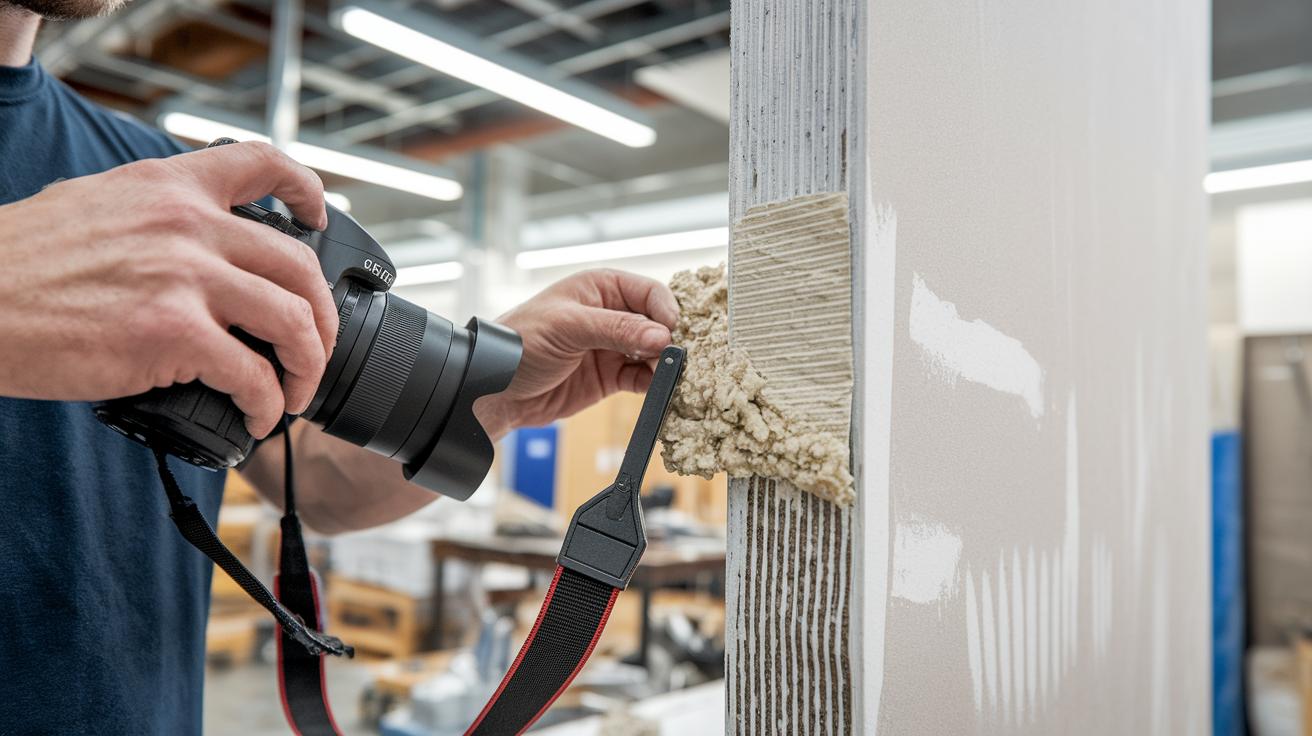
To get a clean finish on your drywall corners, using the proper tools and materials is a must. Start by picking your compound. A setting-type compound works well for deep filling because it hardens fast and shrinks less. If you plan on applying several layers and can wait a bit longer, a premixed compound is an option, though it can take a few days to dry.
Next, choose the right tape. Mesh tape is great for beginners since it sets into place easily with fewer air bubbles. If you're ready for a stronger joint, try paper tape. Just dip it in water first to help it lay flat and avoid creases.
For your final coat, use a topping compound. It is creamier and shrinks less as it dries, leaving you with a smooth, glossy finish free of pockmarks. Equally important are your quality tools. A 6 in stiff-bladed knife is needed for precise application, while a 14 in plaster hawk helps you keep your compound handy. Also, a knockdown knife with a soft rubber blade lets you flatten ridges without damaging the surface.
| Tool/Material | Purpose | Estimated Cost |
|---|---|---|
| 6 in stiff-bladed knife | Smoothly spread and embed joint compound | $6 |
| 14 in plaster hawk | Hold and transfer compound | $35 |
| Knockdown knife (soft rubber blade) | Flatten compound ridges without gouging | Varies |
| Setting-type compound | Deep filling with fast hardening and low shrinkage | Varies |
| Premixed compound | Build multiple layers for finishing; longer drying time | Varies |
| Mesh tape | Easy embedment with fewer air bubbles | Varies |
| Paper tape | Stronger joints when dipped in water first | Varies |
| Topping compound | Final, smooth, glossy finish with minimal pockmarks | Varies |
Proven Inside Corner Mudding Techniques for Drywall Taping Corners
If you're an experienced DIYer, try these tricks for perfecting inside corner mudding. When you see air bubbles or curls in the compound, lightly spray the area with water before adding more compound. For example, give it a quick spritz, similar to moistening breadcrumbs before making a roux.
If you work in hot or dry conditions and the compound sets too quickly, mix in a little water. This simple change keeps the compound workable and helps the tape stick smoothly.
For a finer finish on uneven or bowed corners, use a curved knockdown knife. It helps smooth out bumps that a regular 6 in (15 cm) drywall knife might miss. Tip: Use the curved edge with a steady hand, much like leveling wet concrete.
If you spot small imperfections after your first layers, lightly sand them with fine-grit paper. Then, use a damp sponge to blend the edges, which reduces rough spots without needing extra layers.
For a list of recommended tools, visit tools for drywall installation.
- Tip: Light misting can prevent the compound from drying too soon.
- Tip: A curved knockdown knife works well on uneven surfaces.
- Tip: Blend edges with a damp sponge to smooth minor ridges.
Exterior Corner Finishing with Reinforced Paper Corner Beads

Begin by taping all seams and inside corners. This creates a smooth base for the exterior bead. Next, mix your setting-type compound (one that shrinks less and hardens fast for deep fills) and spread it along the corner. While the compound is still wet, press in your reinforced paper corner bead, no nails needed. Think of it as fitting a puzzle piece securely into place.
Then, take a 6 in (15 cm) taping knife and press the bead firmly into the compound. Use one smooth, upward stroke to smooth out any high spots. After the bead is set, clean off any extra compound and ensure the bead is level and secure.
Follow these steps: apply the compound, embed the bead, and quickly smooth out any raised areas before the compound starts to set. This method delivers a cleaner, more professional finish compared to traditional nail-on metal beads.
Common Drywall Taping Corners Mistakes and Prevention
Using butt joints can lead to taping errors. Instead, overlap the tape to smooth out bumps and ease stress on the finish. Extra compound can dry unevenly, which creates bubbles and ripples. If you spot a small bubble, gently tap it with a damp sponge before adding another coat.
Sometimes too much compound sets too fast and leaves rough spots. When compound piles up in tight corners, it may crack later. Check your joint compound to ensure it has a smooth, even mix. A consistent mix helps the tape bond well and slows down drying.
Troubleshooting tips:
- Thick compound can trap air pockets under the tape.
- Ridges might form if the compound dries before the tape is pressed in.
- Uneven application may mean some spots need extra smoothing later.
Corner mudding best practices:
- Overlap the tape to avoid butt joints and spread the compound evenly.
- Use a consistent compound mix to slow drying and ensure good adhesion.
- Watch how the compound dries and lightly rework any areas with air pockets.
- Use a soft rubber blade knockdown knife only to tap down high spots, without overworking smooth areas.
Using these techniques helps fix odd imperfections and saves you extra work later.
Final Coats, Sanding, and Achieving Smooth Corner Finishes

On day two, apply a wet top coat along one side of each drywall corner over a smooth, crumb-free base. The compound is creamy with low shrinkage, giving a shiny finish without pockmarks.
Use a soft rubber knockdown knife and glide it along the corner in one steady stroke. Picture it like smoothing mashed potatoes; a single smooth motion wipes out bumps and keeps the finish even.
After the compound dries, gently sand the surface with fine-grit sandpaper to refine the texture and get it ready for any touch-ups. For more tips on polished textures, visit interior wall finishes (https://neull.com?p=177).
Final Words
In the action, this guide walked you through mixing compounds, embedding tape, and applying finish coats in a clear, step-by-step manner. We covered the taping process fundamentals, necessary tools, and troubleshooting tips for error-free work.
You learned safe methods for both inside and exterior corners and tips to avoid common mistakes. Using step-by-step mud application techniques helps achieve great results with drywall taping corners.
Keep measuring, work safe, and enjoy a smooth, confident finish on your next project.