

Every safety step matters when you're working on a site. Excavation can be dangerous and causes over 20 fatal accidents each year. Following OSHA rules (safety standards set by the Occupational Safety and Health Administration) makes the job safer. Use proper trench entry techniques and add extra protection for deep cuts. This approach helps your team work smart, fast, and safely. In this article, we explain how a solid safety plan turns risky digs into secure, regulated work from the first shovel to the final check.
Comprehensive Excavation Safety: OSHA Compliance and Regulatory Standards
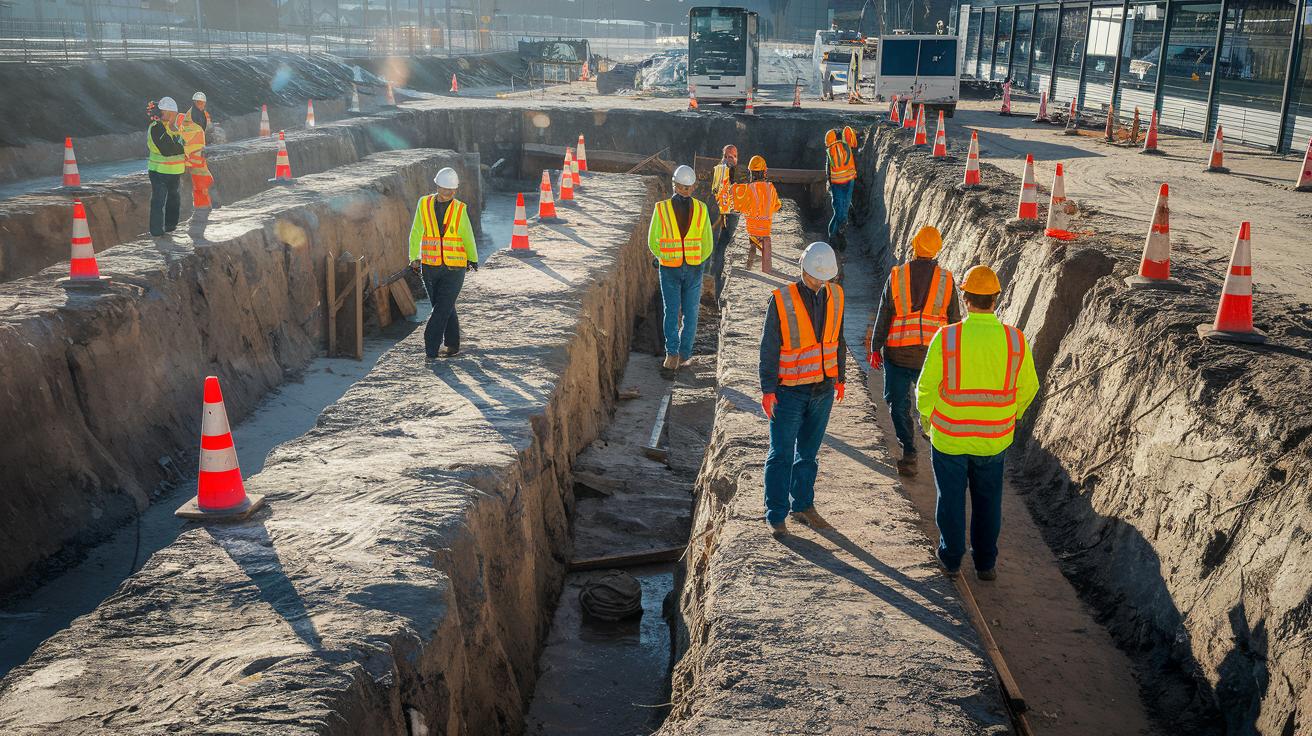
Excavation safety matters a lot on job sites. When you’re digging, every safety step counts. In the United States, about 21 fatal excavation incidents happen each year, and in 2022 that number rose to 39. OSHA sets clear rules to protect workers. These rules cover safe digging (removing soil to make spaces) and trenching (digging narrow ditches no wider than 15 ft / 4.6 m), forming a legal framework to follow from the first shovel to the final check.
OSHA requires that if a trench is 4 ft deep (1.2 m) or more, you must provide safe entry and exit. This could be a ladder, ramp, or set of stairs placed within 25 ft (7.6 m) of where workers are working. For trenches 5 ft deep (1.5 m) or more, you need to add extra protection like sloping, shoring (installing supports), or shielding. These rules come under 29 CFR 1926 Subpart P and are key to keeping your site safe.
Key points to follow:
- Place safe entry and exit options within 25 ft (7.6 m) for trenches that are 4 ft deep or more.
- Add protective systems (sloping, shoring, or shielding) for trenches 5 ft deep or more.
- Have a trained person inspect the site every day.
- Follow the details in 29 CFR 1926 Subpart P.
- Keep training current and run regular safety audits.
Daily inspections and solid training turn these rules into practical safety practices. By following OSHA’s standards and using the proper protective measures, you can greatly lower the risks from unstable soil and possible cave-ins. This hands-on approach helps create a secure job site where safety is always the top priority.
Excavation Safety Risk Assessment and Soil Stability Analysis for Safe Digging

Start with a hands-on site check. Look for any buried utilities and note the weather. Test the air for hazards like low oxygen, hydrogen sulfide (H₂S), or methane before you begin and then during each work shift. This early check is like a pre-flight safety test, it helps you avoid surprises once you start digging.
Then, take a close look at the soil. Feel for how dense and compact the ground is. Check nearby buildings, the level of the water table, and any extra load on the soil to spot potential collapse risks. Knowing the soil type helps you choose the best digging method and decide if you need extra reinforcement. Keep watching the soil throughout the project, as steady conditions mean safe digging while changes call for extra care.
- Type A: Very stable soils with high density. These are ideal for safe digging.
- Type B: Soils that are moderately stable. Use standard safety precautions with these.
- Type C: Soils with lower compaction. They need extra monitoring during work.
- Type D: Unstable soils. Use extra support and strict hazard controls in these areas.
Excavation Safety: Protective Systems and Trench Shoring Guidelines to Prevent Cave-Ins

When you dig trenches 5 ft (1.5 m) or deeper, using the right safety systems is a must. Start with shoring, which means placing supports to hold up the trench walls. Shielding uses trench boxes to block soil pressure, and sloping involves cutting the walls at an angle to keep them stable. Benching, or making stepped cuts, adds extra levels so workers have a safer space to stand. Always follow the manufacturer's guidelines for the correct angles and depth ratings, and never use damaged equipment.
Water can make trench walls even less stable by adding extra load. Control water with ditch pumps or diversion ditches. Inspect the site regularly, especially after heavy rain, to spot changes in the soil or any damage to safety gear.
Using shoring, sloping, and benching together tackles different hazards while meeting OSHA guidelines. Skilled workers should pick the best method or mix of methods based on the job site, soil type, and weather conditions. This approach helps manage all the risks during excavation.
| System | Depth Range | Key Benefit |
|---|---|---|
| Shoring | 5 ft (1.5 m) and above | Provides vertical support to stop wall collapse |
| Sloping | Varies by soil type | Reduces cave-in risk with angled cuts |
| Benching | As specified by the manufacturer | Creates stepped levels for extra safety |
Excavation Safety: Ensuring Safe Entry, Egress, and Protective Barriers

Safe entry and exit paths are a must at every excavation site. OSHA rules say that ladders, stairways, or ramps must be within 25 ft (7.6 m) of workers when a trench is 4 ft (1.2 m) deep or more. This lets workers get out fast in an emergency and lowers the risk of being trapped.
Set up clear passages to keep everyone safe from falls and injuries. Also, keep spoil piles and heavy equipment at least 2 ft (0.6 m) away from the trench edge. This precaution stops materials from rolling back and causing accidents.
Add protective barriers around the work zone to guard against accidental falls. Install guardrails on any open or exposed sides to block people or tools from falling into the trench. Use bright barricade systems and clear warning signs to mark the area. These measures work together to create a well-managed site where safe access and overall site safety remain top priorities.
Excavation Safety: Equipment Integrity Checks and Personal Protective Gear

Begin every workday by inspecting your excavation tools and safety gear. Check for cracks, dents, or warping in trench boxes, hydraulic shoring (equipment that supports trench walls), and braces. For heavy machinery like backhoes and excavators, follow the manufacturer's service schedule and check fluid and pressure levels daily. Always keep equipment at least 2 ft (0.6 m) away from trench edges to avoid accidental damage.
- Look over trench boxes for any cracks, dents, or signs of bending.
- Verify that hydraulic shoring and braces line up correctly and are intact.
- Service heavy machinery according to manufacturer guidelines, checking fluids and pressures.
- Ensure equipment stays a safe distance (minimum 2 ft or 0.6 m) from trench edges.
- Record each inspection in your daily maintenance log.
Don't ignore your personal protective gear either. Hard hats, high-visibility vests, steel-toe boots, gloves, and respiratory protection must be in top condition and worn correctly. Regularly check these items for wear or damage to ensure they meet required safety standards and protect you from both mechanical and environmental hazards.
Excavation Safety: Site Safety Audits, Training Modules, and Toolbox Talks
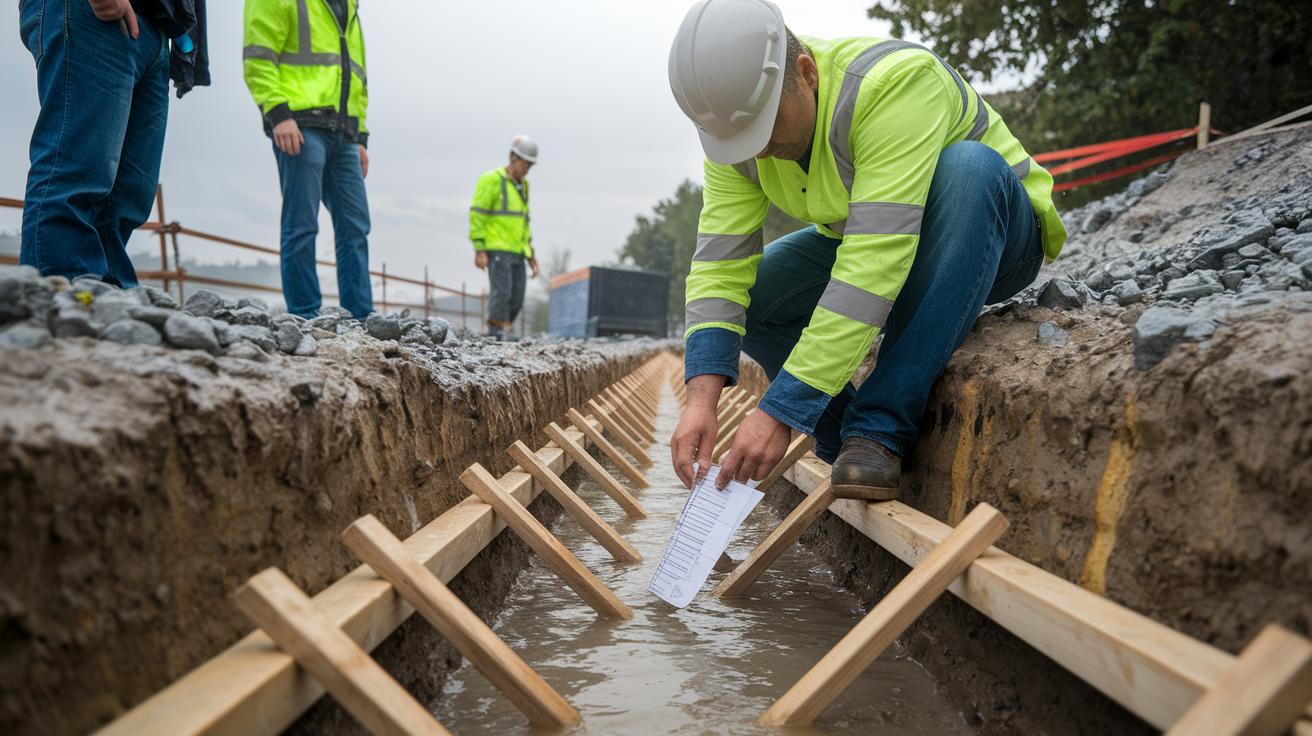
Go beyond your daily checklist by using thorough audit processes that target each site's unique risks. A qualified inspector should adjust the audit checklist to focus on site-specific hazards. For example, after heavy rain or vibrations at the worksite, look not only for obvious problems but also for subtle issues like weakened shoring (temporary support that holds the trench side). Remember: spotting a hidden soft spot next to the trench wall can be as vital as catching a loose deck board.
Use hands-on training modules that bring real-life scenarios into your crew’s learning. Role-playing exercises and case studies work wonders in toolbox talks. Share true stories like, "Last month, a team narrowly avoided disaster when quick emergency drills prevented a cave-in." Such examples drive home the importance of readiness.
- Customize audit checklists for each site’s hazards
- Have a qualified inspector review the area after adverse weather
- Use interactive training with role-playing and simulations
- Incorporate real incident case studies in toolbox talks
- Run regular drill sessions for emergency exits and cave-in prevention
- Offer refresher courses on equipment safety and hazard spotting
Excavation Safety: Emergency Response Planning and Rescue Procedures

Write a rescue plan that covers cave-ins (when the earth collapses), gas leaks, and flooding. This plan should list clear steps and assign roles during emergencies. Coordinate with local emergency services and ensure safe exit routes, like ladders, remain clear. Update the plan regularly to match any changes at the construction site.
Run practice drills every three months with your whole crew. These drills let everyone learn the rescue steps and show where the plan might need improvements. Set up a near-miss reporting system so you can track incidents and adjust your safety measures. This proactive approach helps shorten your response time and prevents accidents before they happen.
- Write and share a detailed rescue plan.
- Run quarterly emergency drills.
- Set up a near-miss reporting system.
- Check that exit ladders are easily accessible and clear.
Final Words
in the action, the guide breaks down each step from hazard assessments to emergency drills. You explored OSHA trench requirements, protective systems, equipment checks, and site audits. Each section builds a solid roadmap for managing risks and keeping projects safe. Following these clear, step-by-step tips boosts your confidence and helps avoid costly mistakes. Stick to these excavation safety practices, and you'll complete your projects safely, on time, and on budget.
FAQ
What is Excavation Safety PDF?
The Excavation Safety PDF provides a concise guide outlining OSHA requirements and best practices for safe trenching and excavation work, serving as a practical reference for job site safety.
What does the OSHA Excavation QuickCard include?
The OSHA Excavation QuickCard offers key standards, safe entry/exit procedures, protective systems, and hazard identification tips, making it a handy resource for on-site safety checks.
What is an Excavation Safety Toolbox Talk?
The Excavation Safety Toolbox Talk delivers short, focused safety messages covering cave-in prevention, proper barricades, and required PPE to help teams stay alert during excavation projects.
What does trenching and excavation safety encompass?
Trenching and excavation safety covers rules from safe access/egress, soil stability analysis, protective systems, equipment checks, and emergency planning to prevent cave-ins and hazards on site.
What is the 5 4 3 2 1 excavation rule?
The 5 4 3 2 1 excavation rule is a safety protocol designating five key inspection points, four protective systems, three personnel checks, two means of egress, and one mandated emergency plan for safe excavation.
What are the OSHA rules for excavation safety?
The OSHA rules for excavation safety mandate barriers, safe means of entry/exit, daily inspections, and protective systems like shoring or sloping for trenches over 4 ft (1.2 m) deep to prevent cave-ins and other hazards.
What are the 5 P’s of safe excavation?
The 5 P’s of safe excavation highlight key principles: planning, positioning, protection, proceeding, and post-inspection, ensuring every step meets OSHA guidelines and reduces workplace risks.
What are the safety measures for excavation?
The safety measures for excavation include using protective systems, proper barricades, competent daily inspections, necessary PPE, and emergency planning to secure a safe working environment.
What are the types of excavation safety practices?
The types of excavation safety practices span soil stability analysis, protective systems, equipment checks, and training programs, all designed to meet OSHA standards for a secure job site.