

Your floor can change the look of your whole house. Wood flooring patterns add charm while making rooms feel bigger and brighter. Try a timeless herringbone (angled layout) or a modern 3D parquet (layered geometric design). Mix classic and bold styles to bring both beauty and smart function to your home. Get ready to see your space in a whole new light.
Overview of wood flooring installation patterns

Herringbone is a time-tested design that dates back to ancient Rome. Its angled wood pieces create a zig-zag effect that makes rooms feel larger and adds a lively flow. Picture a room with a modern vibe that also nods to history, that’s the magic of herringbone.
Chevron is a close cousin to herringbone. In this pattern, each board is cut so the ends form a clear V shape. This European style brings steady movement to your space and makes it appear more open.
Random plank patterns mix boards of different lengths for a naturally varied look. This style gives your floor a dynamic, lived-in feel. In contrast, the brick pattern uses boards cut to the same length and arranged neatly to mimic masonry. This setup brings a simple sense of order and symmetry.
Basket weave interlocks small wood pieces, creating a woven look that adds subtle decoration without overwhelming the room. For smaller areas, a straight plank layout works best. Laying boards side by side along the longest wall helps the space feel bigger thanks to its clean, simple lines.
For a modern twist, try 3D parquet. This pattern combines classic block layouts with added depth and shadow play. Properly staggered joints not only boost the floor’s strength but also enhance its visual appeal.
Common plank style patterns for wood flooring installation patterns

Engineered wood flooring can brighten your home with its unique looks. Choosing the right plank style means balancing appearance with cost. Standard planks, which are less than 200 mm (7.9 in) wide and up to 2000 mm (78.7 in) long, offer a classic feel that fits many rooms. They deliver a neat, balanced look for both traditional and modern spaces.
Extra-wide or extra-long planks create a more open, continuous floor. Fewer seams let light flow smoothly across the room, ideal for open areas. Multi-length planks add charm by mixing different board lengths. This mix creates a dynamic, textured surface with genuine character. Three-strip planks use three rustic oak staves per board to highlight the wood’s natural grain and add a detailed, artistic touch.
Remember, the size and layout you choose can also affect cost. Larger planks may cost more because they use more material, so plan wisely to keep your project on budget.
Consider these engineered plank types:
- Standard planks: less than 200 mm (7.9 in) wide and up to 2000 mm (78.7 in) long for a timeless look.
- Extra-wide/long planks: more than 200 mm (7.9 in) wide or longer than 2000 mm (78.7 in) for a seamless floor.
- Multi-length planks: a mix of board lengths for added texture.
- Three-strip planks: built with three oak staves per board to showcase natural grain.
| Plank Type | Dimensions | Visual Impact |
|---|---|---|
| Standard | <200 mm (7.9 in) × up to 2000 mm (78.7 in) | Classic and balanced |
| Extra-Wide/Long | >200 mm (7.9 in) or >2000 mm (78.7 in) | Spacious and seamless |
| Multi-Length | Varied lengths | Textured and dynamic |
| Three-Strip | 3 oak staves per board | Rustic and detailed |
Classic and modern parquet designs in wood flooring installation patterns
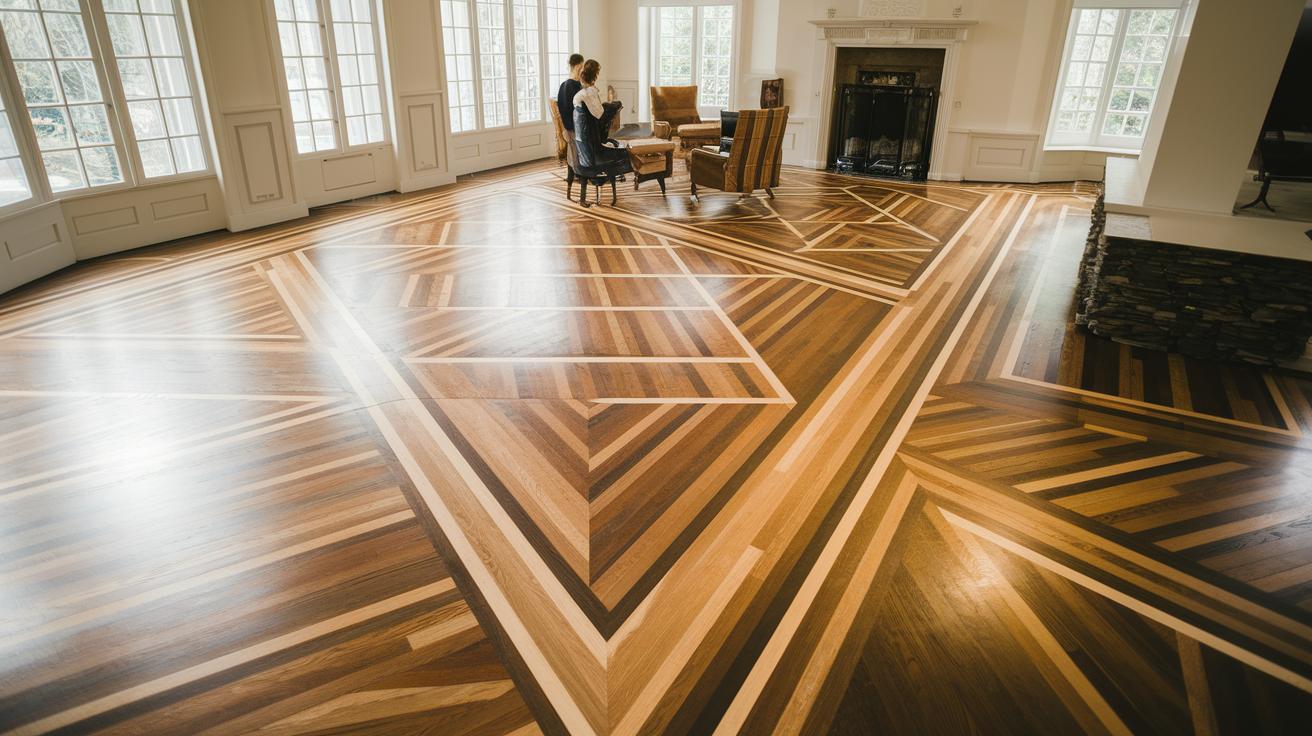
Herringbone Pattern
Inspired by designs from ancient Rome, the herringbone pattern uses wood blocks measuring 90 × 400 mm (about 3.5 in × 15.7 in) arranged in a clear zig-zag. This look works best in larger rooms where the lively pattern fills extended spaces. Measure each block carefully to keep the design even. Lay each piece with a small gap so the pattern stays open and highlights the room’s width and depth.
Chevron Pattern
The chevron design features boards cut at an angle to create a distinct V-shape. This style brightens mid- to large-sized spaces by reflecting light around the room. When installing, ensure every board lines up precisely at the V joint. Think of the V as arrows guiding your eyes outward, giving the area a fresh, open feel.
Versailles Panels
Versailles panels combine diagonal and straight cuts in a design inspired by 16th-century French style. Ideal for elegant or historic settings, this pattern mixes classic charm with modern appeal. Arrange the panels in a balanced grid to show off both the fine craftsmanship and the timeless look. Alternating diagonal inlays with straight lines creates a refined style that lifts the entire room.
These parquet styles bring together history and modern design to brighten your home with unique, eye-catching patterns.
Staggered layout techniques for wood flooring installation patterns

Random stagger lets the boards fall into place without a fixed formula. This gives your floor a simple, lived-in look. The boards settle naturally, which works well when small differences add to the charm of a room.
Fixed stagger, also called the step pattern, uses a repeating sequence to line up the end joints every few rows. This creates a clear step effect and gives your floor a patterned, balanced look. Homeowners with large rooms often choose this method for its neat rhythm.
½ stagger arranges the boards so that every other row lines up perfectly, much like a brick wall. This pattern offers a tidy and symmetrical appearance. It not only looks good but also makes your floor stronger by keeping the layout uniform.
⅓ stagger shifts the joints every third row. This method softens the repeated pattern seen in other styles and adds a touch of variety while keeping things neat. You can even tweak it for special design effects if you’re looking for a unique touch.
All these methods boost the strength of your floor and bring a distinct style to your space.
Pros, cons, and room suitability of wood flooring installation patterns
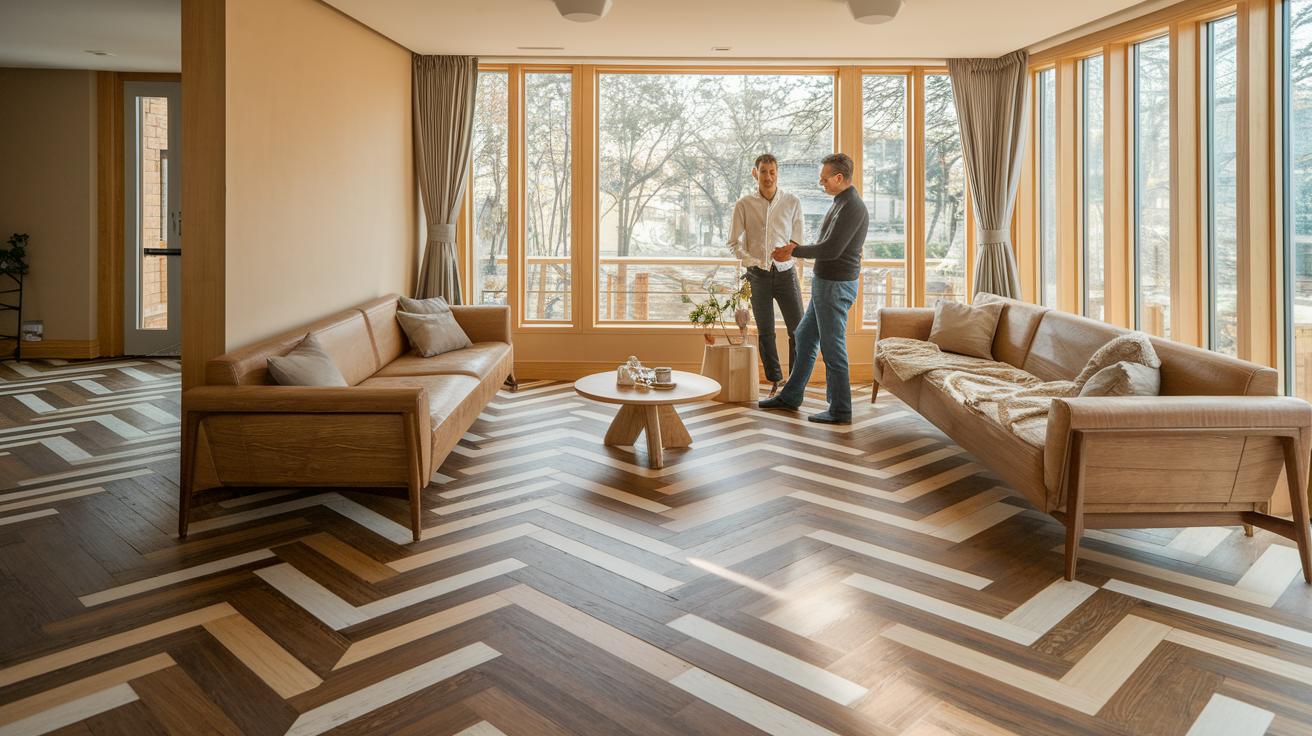
Wood flooring patterns can completely change a room’s look, but each design has its own pros and cons. Some patterns take more skill and time, while others are simple and friendly on your budget. When you plan your project, match the design’s visual impact, how hard it is to install, and the cost to your room size.
- Herringbone and Versailles: These patterns look sharp in large, formal rooms. They need careful planning and precise measurements, so they work best for those willing to invest extra time.
- Chevron: This pattern is a step up in complexity. The angled board layout makes medium to large rooms feel larger.
- Basket Weave: This decorative design works well in dining rooms or entryways. It takes moderate skill and lets you mix different wood types for extra texture.
- Straight planks: This is the easiest design to install. The long, uniform lines help small rooms look more spacious.
- 3D parquet: This advanced technique creates a real statement in great rooms. It requires a longer installation process, so use a project timeline template (6 ft / 1.8 m scale) to plan the steps.
Remember, more complex patterns can add extra labor, create more material waste, and increase overall costs.
Maintenance, durability, and long-term benefits of wood flooring installation patterns

Wood flooring installation patterns do more than add style, they make cleaning and caring for your floors simple. Sweeping sawdust off a smooth wood floor is easier than vacuuming a carpet full of fibers. This simpler routine helps keep allergens and dust at bay, letting you enjoy a healthier home.
Wood also acts like a natural heater and cooler. It keeps your room warm in winter and cool in summer without extra energy use. With fewer fibers to trap dust, wood floors also boost indoor air quality.
Another big plus is longevity. Wood flooring can be re-sanded and refinished multiple times. Each refinish acts like a mini makeover, restoring the floor's beauty and extending its life for many years.
Plus, many hardwoods come from sustainable sources. This eco-friendly option not only enhances your home's look but also makes your initial investment go further over time.
| Benefit | Description |
|---|---|
| Ease of cleaning | Smooth surface that traps less dust and allergens |
| Natural temperature regulation | Keeps rooms warmer in winter and cooler in summer |
| Improved indoor air quality | Fewer fibers can trap dust, reducing allergens |
| Long-term durability | Can be re-sanded and refinished to look new |
| Eco-friendly sourcing | Many hardwoods come from sustainable practices |
Final Words
In the action, the guide broke down timeless designs, from herringbone and chevron to Versailles panels, explaining how each style shapes room feel and durability. It covered four plank categories and detailed stagger methods that boost both strength and aesthetics. You discovered key tips on balancing style with budget and maintenance, ensuring your project stays safe and efficient. Embrace the practical advice and tackle your next project with confidence using wood flooring installation patterns. Enjoy the process and the stunning results ahead!
FAQ
What free wood flooring installation patterns PDF are available?
Free wood flooring installation patterns PDFs offer detailed guides showcasing designs like herringbone, chevron, and straight patterns, so you can download layouts to visualize and plan your installation.
What are common wood floor pattern names?
Common wood floor pattern names include herringbone, chevron, random, brick, basket weave, straight, and 3D parquet, each providing a unique look and enhancing room aesthetics.
How do laminate wood flooring installation patterns differ from hardwood designs?
Laminate wood flooring installation patterns mimic hardwood styles by offering various layout options such as random or straight patterns, blending cost efficiency with a realistic wood look.
What defines a random wood floor layout pattern?
A random wood floor layout pattern mixes planks of varying lengths and positions, creating a natural, textured look that brings authenticity and a casual style to your flooring.
What determines a hardwood flooring pattern layout?
A hardwood flooring pattern layout is determined by the chosen design—whether it’s herringbone, chevron, or straight planks—which influences the room’s perceived size and overall visual impact.
How do hardwood floor patterns pictures help in planning?
Hardwood floor patterns pictures serve as visual references, showing different styles and details that help you decide on a design that best fits your room’s size, style, and installation needs.
What are straight wood floor patterns?
Straight wood floor patterns arrange planks in a uniform, parallel manner, offering a simple, clean look that can make smaller spaces appear larger and provide a timeless style.
What pattern should you lay for hardwood flooring?
Choosing a hardwood flooring pattern depends on your space; options like herringbone suit large rooms, while straight patterns work well in smaller areas to maximize the sense of space.
What is the rule of 3 in flooring?
The rule of 3 in flooring means staggering plank joints every three rows, a technique that helps prevent alignment issues, improves floor strength, and creates a visually appealing layout.
How do you properly stagger wood flooring?
Proper staggering in wood flooring involves offsetting end joints using methods like random, fixed step, ½, or ⅓ patterns, which increases the floor’s structural stability and aesthetic appeal.
What is the best pattern to lay flooring?
The best flooring pattern balances functionality and style—whether choosing a classic straight layout for simplicity or a dynamic chevron design to amplify space and add visual interest.