

Ever get frustrated with clunky expansion anchors when hanging things on brick? Masonry screws make the job easier. These self-tapping fasteners create their own threads in brick and mortar, meaning you just drill a small pilot hole and drive the screw in. No extra parts or special tools needed. This approach speeds up your work and results in a neat, strong hold. Get ready to mount your items with confidence and efficiency.
How Masonry Screws Ensure Secure Brick Installations
Masonry screws for brick are self-tapping fasteners. They cut threads directly into brick, mortar joints, block, or concrete. They come with a bright blue, rust-resistant coating, which makes them ideal for both indoor and outdoor projects. You can choose between a Phillips flat head for a flush finish or a hex head that drives more easily.
These screws offer big advantages over traditional expansion anchors. Expansion anchors usually need extra parts, special tools, and more time. With masonry screws, you just drill a pilot hole and drive in the screw using one tool, which cuts down on mistakes. For example, when mounting a shelf bracket, you only need to drill your pilot hole and set the screw. Quick tip: a simple twist of a masonry screw can secure heavy loads, much like a zip-tie holds items together.
You can use these screws to install shelving brackets, secure security cameras, mount electrical boxes, attach house numbers, or hang exit signs. Their design provides a tight, steady hold, perfect when you need accuracy and long-lasting strength.
These high-strength screws are engineered to handle heavy wall loads. They offer a fast and secure installation, making them a trusted choice for homeowners, DIYers, and small contractors looking for efficient brick fastening solutions.
Types of Masonry Screws and Expansion Anchors for Brick

Self-tapping screws (often known as Tapcons) cut their own threads in brick, mortar joints, block, or concrete. They make installation faster by removing the need for sleeves. This approach is a favorite among DIYers who want a simple, clear way to mount items like electrical boxes or shelves, just screw and secure.
Expansion anchors offer another reliable way to fasten items to brick. Sleeve anchors expand as you tighten them, providing stable support for medium loads without extra drilling. For extra security, double expansion shield anchors widen at both ends when the screw is driven in, which is helpful when the brick isn’t uniformly solid.
For tougher jobs that need extra strength, wedge anchors deliver high holding power with a small sleeve near the base to boost grip. They work well for heavy loads on solid brick. On the other hand, female expansion anchors need extra bolts, washers, and sometimes a setting tool. They’re best suited for light items or hollow brick setups.
Before choosing an anchor, check if your brick is hollow or solid and know the load your project will bear. Exploring options like brick masonry anchors can give you key insights, helping you keep your project safe and efficient.
Load Capacacities and Technical Specifications of Brick Masonry Screws
A 3/16 in (approximately 4.8 mm) masonry screw can handle about 238 lbf (roughly 1,058 N) of shear force in solid brick. That makes it a good choice for lighter or medium loads. For tougher jobs, use a 1/4 in (around 6.35 mm) screw which is rated at about 600 lbf (approximately 2,670 N). The screw must be long enough so that its length exceeds the embedment depth by at least the head thickness. This extra length ensures a tight fit and helps resist pullout forces.
Always drill a pilot hole with the proper carbide-tipped bit that matches the screw’s diameter. Using the right size drill bit prevents misalignment and uneven load. Choose a drill bit that fits the screw exactly – not too wide to lose grip and not too narrow to make insertion tough.
When it comes to materials, your choice matters. Carbon steel screws offer reliable strength indoors, while stainless steel screws are better for outdoor use because they resist corrosion. Some screws also feature special coatings that add extra protection against moisture and weather. Quick tip: Double-check your screw’s specs to match both the load capacity and the environment before you begin your project.
Step-by-Step Installation Guide for Masonry Screws into Brick

-
Mark the drill spot carefully. Use a pencil or center punch to make a small mark where the screw will go. This little dent guides your drill bit to start at the right point.
-
Drill a pilot hole using a hammer drill with a carbide-tipped masonry bit that fits your screw. Using the correct bit size stops the hole from being too big, which can lead to a loose grip. Once the hole is drilled, clean out all the dust with compressed air, a wire brush, or a vacuum. A dust-free hole helps the screw hold strongly in the brick.
-
Insert the screw into the pilot hole. Turn it clockwise and push with steady pressure until it sits flush with the brick or reaches your desired depth. This steady force helps the screw cut clean threads in the brick.
-
If you're using a hex head screw, switch to an impact driver or a wrench. This change gives extra torque to drive the screw in securely. Quick tip: An impact driver can turn stubborn screws faster than a regular drill.
-
For outdoor work, seal the hole immediately after drilling by applying silicone. This step protects the screw from moisture and prevents the brick from taking on water that might damage the hold.
By following these steps, marking carefully, drilling precisely, cleaning well, and using the right tool, you install your masonry screw safely and securely.
Choosing the Best Masonry Screw: Selection Criteria and Best Practices
Start with your brick type. Solid bricks often need a heavier duty screw if you plan to hang heavy items. For lighter jobs like hanging small fixtures, screws made for hollow bricks work just fine.
Next, check the screw’s head style. A flat head gives you a neat, flush finish, which is great when the screw will be visible. A hex head speeds up work if you need to install fast. Choose the style that fits your project and pace.
Look at the screw material, too. Carbon steel works well indoors. For outdoor projects where rust is a concern, pick stainless steel (or a screw with a protective coating) to keep corrosion at bay.
Verify the screw’s length and diameter. The screw should match your embedment depth so it holds securely without going too far into the brick. Prices usually range from about $0.50 to $2 per screw based on size and material, so pick one that meets both your budget and performance needs.
Lastly, make sure the screw meets the manufacturer’s guidelines and local building codes. This check helps you ensure a safe, reliable setup that fits your project's demands.
Comparing Masonry Screws with Alternative Brick Fastening Methods
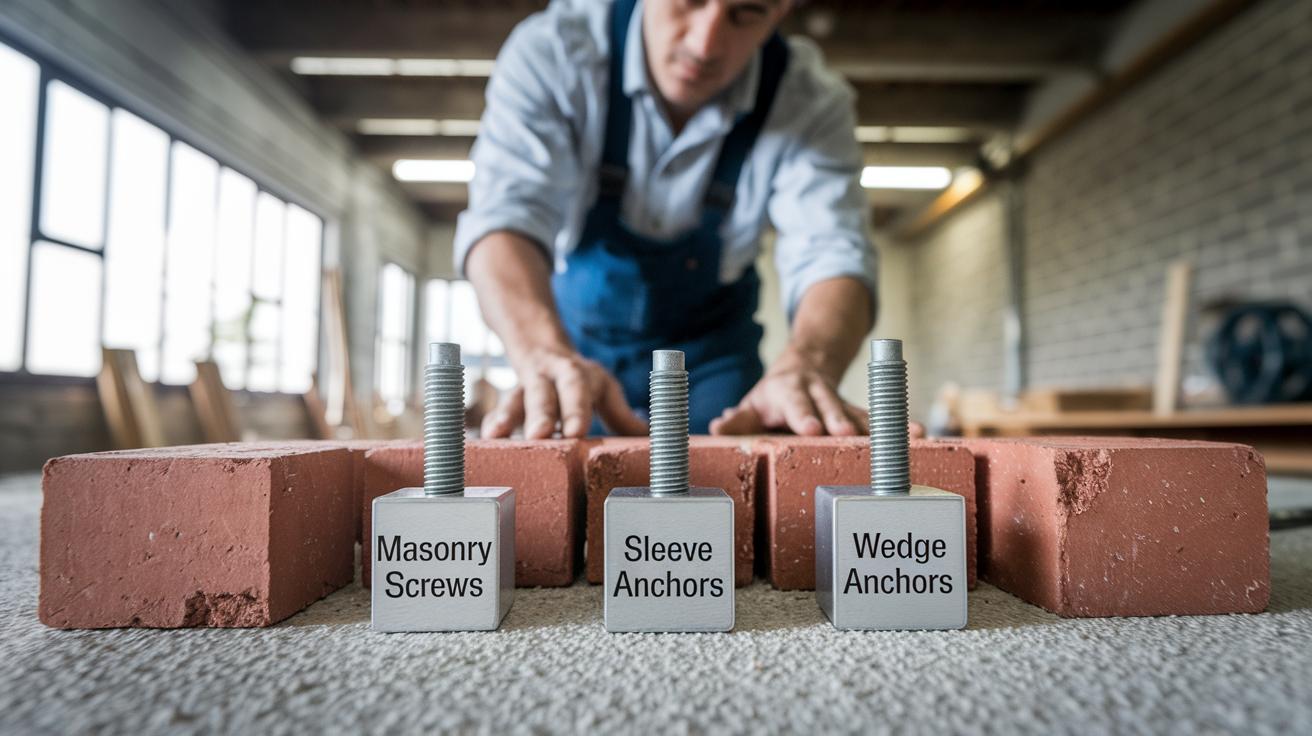
Looking at your fastener options? Here’s a quick guide to help you choose the best fit for your brick project. Masonry screws work well for light to medium loads and let you install quickly and reuse them. Sleeve anchors grip strongly and suit medium loads for both solid and hollow brick. Wedge anchors are built for heavy loads, giving you extra pull and shear strength for tough jobs.
| Fastener Type | Ideal Use | Pros | Cons |
|---|---|---|---|
| Masonry Screws | Light to medium loads; wood/metal applications | Easy to install, reusable, no damage from expansion | Lower load limit |
| Sleeve Anchors | Medium loads in solid or hollow brick | Strong hold and uniform grip | Requires precise hole depth |
| Wedge Anchors | Heavy loads in solid brick | Highest strength for both pulling and shearing | May crack the surface |
Quick tip: If you’re handling a light load and want to save time, masonry screws are the way to go. For heavier projects, sleeve or wedge anchors are safer choices, like choosing a heavy-duty workhorse instead of a standard car.
- Check your load needs.
- Choose the fastener that fits your project.
- When using sleeve anchors, make sure to drill the correct hole depth.
Final Words
In the action, we broke down fastener types, installation steps, and load capacities. We explained how to choose the ideal screw based on brick type, load needs, and material specs. We also weighed the pros and cons of masonry screws against sleeve and wedge anchors.
Our guide gives clear, step-by-step advice, from marking your drill points to sealing exterior holes. Follow these tips to keep your project safe, efficient, and cost-effective. With quality masonry screws for brick, you’ll build secure connections with confidence.
FAQ
How can masonry screws be used for brick installations?
Masonry screws for brick installations work by cutting threads directly into brick or mortar, securing items like shelves, cameras, and electrical boxes without the need for bulky anchors.
How do heavy duty masonry screws for brick differ from standard screws?
Heavy duty masonry screws for brick offer extra strength and durability. They feature corrosion-resistant coatings and hex head designs to make installation easier and provide a more secure hold.
Do I need to pre-drill for masonry screws in brick?
Pre-drilling for masonry screws in brick is recommended. Creating a pilot hole with a carbide masonry bit prevents cracking and allows the screw to tap threads properly into the brick.
Can concrete screws be used without pre-drilling?
Concrete screws designed for no pre-drilling can sometimes tap their own threads, but following manufacturer instructions is key to prevent damage and ensure a solid hold in concrete.
Are masonry screws suitable for cinder block installations?
Masonry screws for cinder block tap threads into the block when the correct pilot hole is drilled. This method provides a secure anchor for medium-load applications in cinder block walls.
Where can I find masonry screws for brick and block projects?
Masonry screws for brick and block projects are available at major home improvement stores like Lowe’s and Home Depot, offering various sizes and types suitable for different installation needs.
Which screws are best for brick projects?
The best screws for brick projects are often self-tapping masonry screws like Tapcon, known for their corrosion resistance and ability to penetrate brick and mortar securely.