

Have you ever wondered how stone structures last for centuries? Stone masonry isn’t just a craft, it mixes hands-on skill with a creative touch. Today, we outline five proven methods that turn plain stone into lasting art. From ancient bridges to modern building fronts, these techniques build spaces with both strength and style. In this post, we break down each method to show that classic techniques can still shine today.
Essential Stone Masonry Overview
Stone masonry is the craft of using natural stone like granite, limestone, or slate. These stones are quarried, reshaped, and fitted together to form tough structures. They handle heavy loads, making them perfect for pathways, supports, fireplaces, and home exteriors. Think of an age-old stone bridge where each stone is picked and formed to bear heavy traffic; it shows how well these methods work over time.
Manufactured stone veneer, on the other hand, mimics natural stone. It is much lighter and costs less. This factory-made material works best for non-load-bearing projects like accent walls, kitchen backsplashes, or bathroom features. Imagine giving a room a new look with a stone veneer wall that adds warmth and texture without the weight of traditional stone.
Your choice depends on your project needs and budget. If you need a strong, load-bearing surface, natural stone is the way to go. If you want the look of stone without the extra heft and cost, stone veneer is a great option.
Both options have their perks. Real stone masonry brings a timeless look and durability. Manufactured stone veneer offers a cost-effective way to add style. Match the method to your project to balance beauty and strength with the lasting charm of stone construction.
5 Stone masonry Techniques Spark Timeless Art

Stone masonry got its start as a survival skill. In ancient times, people built homes and monuments using the rock they found around them. Early masons worked with basic tools to shape stone, much like farmers planned out their fields. For example, ancient builders cut and laid stone blocks so well that monuments like the pyramids still stand today.
Around the globe, cultures developed their own ways to work with stone. Native Americans built stone structures that honored their strong ties to the land. In Scandinavia, masons crafted buildings that could brave harsh winters. African builders used local stone and creative bonding techniques to construct stable walls. These age-old methods set the stage for modern practices that include hands-on work, studying existing walls, and learning directly from skilled masons.
Over the centuries, masons sharpened their skills to mix solid construction with artistic design. Stone work was never just about building; it was about leaving a legacy behind. Traditional methods stress the value of following time-tested patterns before you add your own twist. Today’s stone masonry still carries that same spirit, with every cut, block placement, and mix of mortar telling a story of human ingenuity and the timeless charm of working with stone.
Key Materials and Stone Selection for Masonry
Picking the right stone is key for a strong masonry project. Start by checking what local quarries offer. Areas often have materials like Bedford limestone, granite, or slate. Each type has its own look and strength, making it best for certain styles and weather. For example, one quarry might offer tough limestone for outside walls, while another may have granite that holds up well in busy spots.
Remember, most quarried stones need reshaping before you can use them. That reshaping, plus shipping from far away, can add to your costs. A good tip is to visit local quarries or check regional directories. This lets you see how the stone weathers and helps you choose one that fits your local conditions.
Keep these points in mind:
- Verify durability and weather resistance.
- Weigh transportation costs and any extra processing needed.
- Check local sources to get the best mix of price and quality.
By looking at local options and understanding the stone’s traits, you can balance beauty, strength, and budget in your masonry project.
Foundational Techniques in Stone Masonry Construction

Start by digging a solid footing for your stone wall. Clear a trench that is wider than the wall base, and make it deep enough, about 1.5 times the wall’s width. For example, if your wall is 2 ft (0.6 m) thick, dig a trench that is deeper and wider accordingly. To add extra stability, slope the sides of the trench inward at around 15°. This setup helps keep your wall steady whether you use mortar or build a dry stone wall.
Next, sort your stones by size. Set aside the largest and flattest stones for the base and the ends of the wall. Lay out your stones on the ground first so you can plan your course pattern. Use a mason’s level, guide string, and small stakes to line up each row. This makes sure you don’t leave gaps and that the stones bond well with the mortar.
When you’re ready to lay each layer, spread the mortar evenly over the stone surfaces. Make sure to cover every edge completely; missing spots can weaken the wall. Think of it like fitting together puzzle pieces, each stone must properly support the next.
Build the wall upwards one row at a time. Check frequently that the wall stays level and straight. If a row is off, gently tap the stones back into place instead of using heavy force. This careful adjustment helps keep the structure secure.
Finally, inspect each section once you finish. Following these steps will give you a durable wall that stands strong and looks good, meeting both safety and style needs.
Traditional Bonding and Stone Cutting Techniques for Masonry
Uniform ashlar blocks need precise cuts to look their best. Masons use tools like masonry saws, tile saws, grinders, and pneumatic hammers to create straight, clean edges on each stone. This accuracy not only gives the wall a sleek look but also makes sure every row lines up perfectly. For example, a mason might say, "I used the masonry saw to get a straight, even edge on each stone," which shows just how important precision is.
For a different style, some masons work stones by hand using chisels and hammers. This hand-hewn method leaves a rough, textured finish that adds a warm, natural feel to the wall. It works great when you want a rustic look with character rather than a uniform feel.
Bond patterns, such as coursed ashlar (stones set in regular, horizontal layers), give walls a balanced and steady appearance. Masons sometimes alternate the rows to boost the wall's stability. With a guide string and a level, they make sure every row follows the intended design.
How you apply grout (mortar used to fill joints) also changes the wall's look. Over-grouted joints reveal thick mortar lines that give the wall a textured, old-world charm. Think of a stone wall with filled, bold joints that add depth. In contrast, recessed grout keeps the mortar hidden, making the wall appear sleek and modern while showing off the stone's natural color and shape.
By combining careful cutting with traditional hand-finishing, every stone wall becomes a piece of timeless art.
Modern Tools and Safety Practices in Stone Masonry
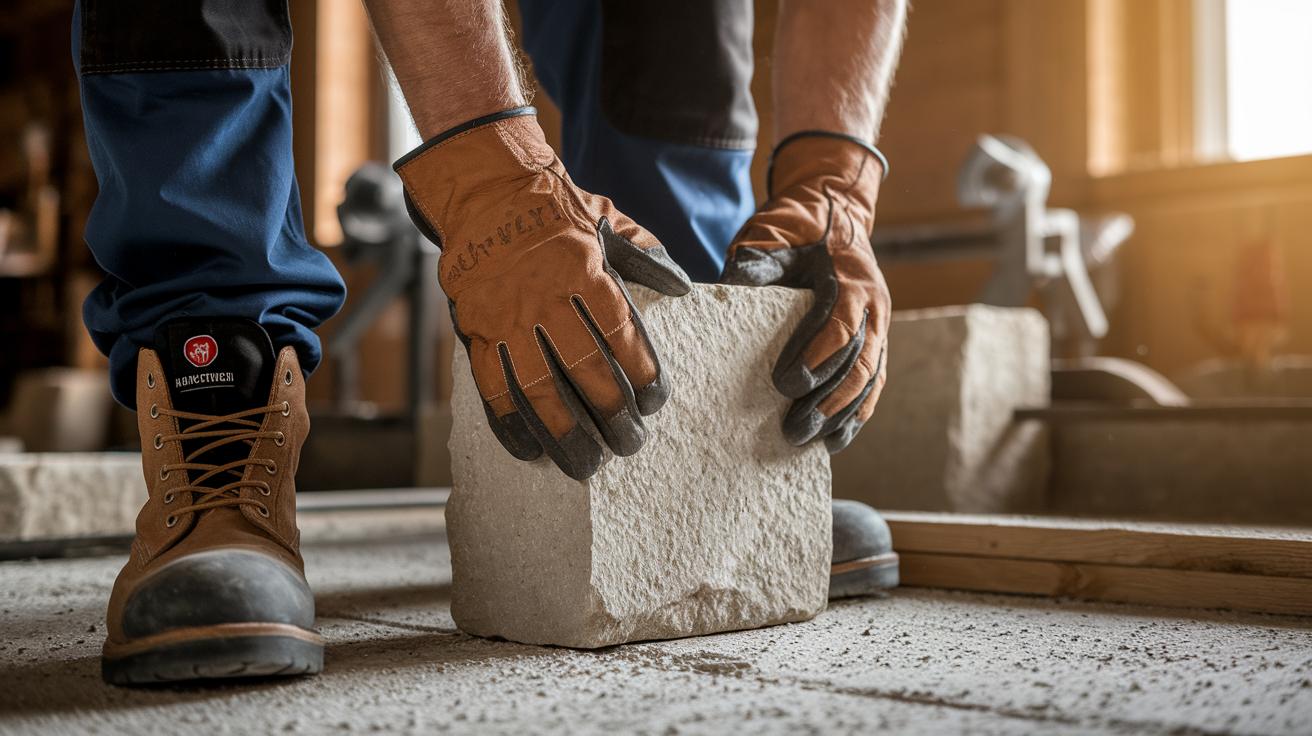
Always wear the proper gear when working with stone. Put on your horsehide gloves to grip rough surfaces, hard-toed boots to protect your feet, and long pants to keep your legs safe from scratches. A seasoned mason might say, "I never start moving stones without my horsehide gloves and sturdy boots."
When shifting heavy stones, work safely. Use levers (simple machines for lifting), ramps, or sleds to move large pieces, and always lift with your legs instead of your back. A handy tip is to insert a wedge to lift the stone by about 1 cm (0.4 in). One mason shared, "I wedged the stone just enough to slide in my leveling tool, it saved me a lot of effort."
Modern tools make the job faster without losing precision. Masonry saws, grinders, pneumatic hammers (powered tools for breaking stone), and mortar mixers help you get cleaner cuts and even mortar joints. A mason might remark, "My pneumatic hammer works like a charm on tough stone, letting me refine my work quickly."
Remember to check resources like the brick masonry drill bit guide and a jobsite safety analysis to choose the right drill bits and keep your work area secure.
Step-by-Step Stone Masonry Wall Building Process
For a detailed guide on techniques, refer to our Foundational Techniques in Stone Masonry Construction section.
-
Begin by spreading your stones on the ground so you can plan the wall’s pattern. Group the stones by size and save the flattest, most square ones for the corners.
Example: "Place a few key stones first to check your alignment." -
Set up the base course using your largest stones. This creates a firm, level foundation for the wall.
-
Build the wall one course at a time. Hold each stone firmly and lower it gently into place so you don’t force it and misalign the gaps.
Example: "Secure the stone before carefully letting it drop; too much force can shift your layout." -
Alternate the stones in each course so that the vertical joints do not line up. This keeps the wall strong and stable.
-
Use a level and guide string to check each layer. This helps you keep the wall plumb (vertically straight) and even.
-
Finally, place key corner stones at both ends. These stones define the wall’s shape and add extra security.
Each step builds on traditional masonry methods to ensure your wall is safe, level, and long-lasting.
Maintenance and Repair for Stone Masonry Structures

Keep your stone walls looking good and strong by checking them regularly. Walk around your structure and look for cracks, gaps, or signs of water seepage. When you see a small gap, fill it in with mortar that matches the stone. One mason explained, "I filled a fine crack in my garden wall with color-matched mortar to keep its look seamless."
Replace chipped or crumbled stones one at a time instead of doing a big patch-up job. This careful fix helps keep the wall sturdy and true to its original charm. Don't use too much mortar when grouting; excess mortar can cover the natural stone texture and block the wall from breathing. Use a low-alkali, breathable mortar to help with energy efficiency.
Keep a close eye on the joints and re-point them when needed:
- Check joints frequently for wear.
- Remove any loose or damaged mortar.
- Reapply mortar evenly with a mason’s trowel.
This simple routine not only refreshes the wall’s look but also stops further damage. As one stone mason put it, "Regular re-pointing keeps the wall weatherproof and extends its lifespan." With regular maintenance and careful repairs, your stone masonry can stay a timeless, strong piece for years to come.
Integrating Stone Masonry into Modern Design Concepts
Mix traditional stone work with new design ideas by using thin-veneer panels for accent walls. These panels give you the classic look of real stone without the heavy weight. For example, one homeowner said, "I used a sleek thin-veneer panel to create a living room filled with natural touches." This shows how you can blend history with modern style.
For outdoor projects, build stone facades for patios and garden walls. This approach brings timeless charm to today’s designs. In damp regions, use natural stone with a metal lath (mesh used to support a finish) and a moisture barrier to protect your work. One builder shared, "I installed a metal lath behind my garden wall to keep out moisture while preserving the stone’s character."
Start by spreading a scratch coat of mortar, then use a notched trowel to add a subtle texture. This method results in a warm, tactile finish that mixes the look of old stone with a modern feel. You can also use traditional stone elements as key features in a clean, contemporary layout. The idea is to combine strength and beauty by using time-tested stone masonry techniques alongside innovative design ideas.
Final Words
In the action, this article walked through laying strong stone masonry foundations using traditional bonding and modern tools. It showed how to pick the right natural stones or veneers, prepare solid bases, and make precise cuts for lasting quality. Each section offered clear, hands-on steps to build and repair your home’s stone features while practicing proper safety and efficient methods.
Stick with these guidelines and step-by-step tips. Your stone masonry project can be both cost-effective and durable, making every effort count.
FAQ
What is a stonemason?
A stonemason is a skilled worker who crafts and installs stone in construction, using techniques like stone cutting, mortar mixing, and precise placement to create durable structures.
How much do stone masons charge per hour?
Stone masons charge per hour based on expertise, location, and project scope, with rates that vary widely by region and job complexity.
How long does stone masonry last?
Stone masonry lasts for decades when built and maintained properly, often enduring 100 years or more with good upkeep on joints and mortar.
How many types of stone masonry are there?
Types of stone masonry include rubble, ashlar, coursed, and dry stone methods, each offering unique aesthetics and structural benefits.
What does stone masonry salary imply?
The stone masonry salary reflects the average earnings of stonemasons, which depend on experience, location, and the scale of projects handled.
What is involved in a stone masonry apprenticeship?
A stone masonry apprenticeship offers hands-on training in stone handling, cutting, and setting, typically lasting 2-4 years under experienced mentors.
What are stone masonry buildings?
Stone masonry buildings are structures constructed using stone, providing timeless beauty and durability through techniques that date back centuries.
What do stone masonry courses teach?
Stone masonry courses teach fundamental skills such as stone selection, precise cutting, layout, and mortar application through both theory and practical sessions.
How can I find stone masonry services near me?
You can find stone masonry services near you by checking local directories and community recommendations to locate experienced professionals for masonry work.
What is meant by stone masonry architecture?
Stone masonry architecture refers to building designs that predominantly feature stone as a key material, blending traditional techniques with modern aesthetic appeal.
What are stone masonry books?
Stone masonry books are instructional guides that cover traditional and modern stone techniques, material selection, and project planning for both beginners and seasoned masons.
How is stone masonry practiced in the UK?
Stone masonry in the UK follows traditional building methods with a focus on historical preservation and modern application, supported by apprenticeship programs and specialized training.