

Ever thought a brick veneer makeover could boost your home’s look? Installing thin brick can quickly enhance your curb appeal and add long-lasting durability. Start with a clean, solid base and a careful layout, and you’ll turn a busy day into a chance to achieve a polished finish. Test your pattern, apply the mortar, and work steadily. Each step brings you closer to an exterior that stands up to tough weather. Read on for simple, clear directions that make this project both smart and stunning.
Comprehensive Thin Brick Installation Overview
Thin brick veneer gives your space a striking look and strong outdoor durability. Start by cleaning the surface well, pressure wash it, let it dry, and sweep away any loose debris, to help the brick stick properly. Whether you pick a running bond or a herringbone pattern using Brickwebb sheets, planning ahead makes all the difference.
Before you start setting the bricks, dry-fit two rows (one at the beginning and one at the entry) to lock in your pattern. This practice run helps you see how the design flows, making it easier to line up the sheets when you apply the thin-set mortar in full rows.
- Clean and dry the substrate thoroughly by pressure washing and sweeping.
- Layout and dry-fit two rows of Brickwebb sheets to set your pattern.
- Apply thin-set mortar in full rows for an even spread.
- Press each veneer sheet into place, checking for level (flat) and plumb (vertical alignment).
- Fill the joints with grout using a grout float to keep spacing consistent.
- Once the grout cures, seal the installation to protect against moisture.
Following these steps creates a clean, attractive thin brick finish that lasts. With the right materials and careful work, your veneer project not only boosts your curb appeal but also withstands weather challenges for years to come.
Step-by-Step Thin Brick Installation Guide

This guide walks you through installing thin brick veneer step by step. It covers cleaning, layout, mortar mixing, panel placement, and grouting. Read through each section before you start.
Cleaning and Prepping the Substrate
Start by pressure washing the surface to remove dirt and old residues. Let the area dry completely for 24 hours (1 day) before you sweep away any loose debris. A clean base is key for a lasting installation.
Layout and Dry Fitting
Next, lay out two rows of Brickwebb sheets to test your bond pattern. Set one row at the porch start and one at the entry. This dry fitting helps you decide if you want a running bond or a herringbone look before you commit.
Thin-Set Application
Choose a mortar made for thin brick work. Use the matching notch trowel to spread a full-length row of thin-set mortar. Work in long, even strokes to avoid patches that might cause misalignment. Think of it like evenly spreading butter on toast.
Veneer Placement and Alignment
Press each Brickwebb sheet firmly into the mortar. Check that each row is both level and plumb. Adjust each sheet right away if it’s off. Taking a moment now saves you trouble later, just like you’d align a picture before the hook sets.
Grouting and Final Cleanup
Fill the joints with grout using a float, keeping about 3/8 in (9.5 mm) spacing with plastic spacers. Immediately wipe off any extra grout with a damp sponge. Let the grout cure according to the manufacturer’s instructions for a strong, lasting finish.
Tools and Materials for Thin Brick Installation
Getting your thin brick project done right starts with the proper tools and materials. This guide lists everything you'll need to install your thin brick panels safely and securely. Each item is picked for a specific task to help you achieve a smooth mortar transfer and strong adhesion. Check off each item on this list before you begin. Also, keep a brick masonry drill bit handy when setting up corner pieces or anchors in solid surfaces.
| Tool/Material | Purpose | Recommended Specification |
|---|---|---|
| Brickwebb sheets | Veneer panels for installing thin brick | Thin brick panels |
| Type S thin-set mortar | Sticks panels to the substrate | Mortar designed for thin brick |
| Grout | Fills gaps between panels | High-bond grout |
| Grout float | Presses grout neatly into joints | Ergonomic handle |
| ¼″ notch trowel | Spreads mortar in tight spots | High-quality stainless steel |
| ⅜″ notch trowel | Applies mortar evenly over rows | Consistent notch size |
| Mixing bucket | Combines mortar components | Large capacity, durable |
| Water bucket | Holds water for mixing and cleaning | Sturdy plastic |
| Damp sponge | Removes extra grout | Soft, lint-free |
| Cleaning cloth | Wipes surfaces during and after work | Absorbent fabric |
| Plastic spacers | Keeps joint spacing even | About ⅜″ wide |
| Level and plumb line | Keeps rows straight and vertical | Accurate, easy-to-read |
| Brick masonry drill bit | Drills pilot holes for anchors or corner pieces | Designed for masonry work |
Surface Preparation for Thin Brick Installation

Preparing Concrete and Cement Board
First, patch any cracks in your concrete or cement board to form a solid base. Next, apply a bonding primer so the thin brick sticks well and moisture stays out. Check that the surface is solid, clean, and completely dry before moving on. Always wear gloves, eye protection, and a dust mask when working with concrete.
Prepping Drywall and Wood
For drywall and wood surfaces, remove any leftover paint or wallpaper to reveal a raw surface. Sand shiny areas to help the bonding agent or mesh tape stick. Clean the area well to get rid of dust and grease that might stop proper adhesion. These steps help ensure that your thin brick sticks securely to the indoor surface.
Installing Barriers and Weep Systems
When installing brick outdoors, start with a weather-resistant barrier over the substrate to keep moisture out. Then, add a waterproof membrane to further block water. Make sure to install weep holes at the base so water can escape. This process helps prevent moisture buildup and extends the life of your installation. Always use the correct safety gear during this work.
Finishing and Detailing Thin Brick Installation
After you install your thin brick veneer and fill the joints with grout, pack the grout into every gap using a grout float. Work diagonally along each joint to push the grout in evenly, then wipe away any extra material with a damp sponge. Keep the gaps consistent at 3/8 in (9.5 mm) by using plastic spacers throughout. This attention to detail ensures the bricks are secure and gives the finish a clean, professional look that highlights the brick's natural texture.
For a smooth finish at the corners, install L-shaped thin brick pieces. To avoid clumps of matching color, mix bricks from different boxes so the look stays natural. Once the grout has fully cured for 28 days, apply a penetrating sealant to protect against moisture and stains. This extra step boosts durability and keeps your installation looking great over time.
Troubleshooting and Maintenance of Thin Brick Installation
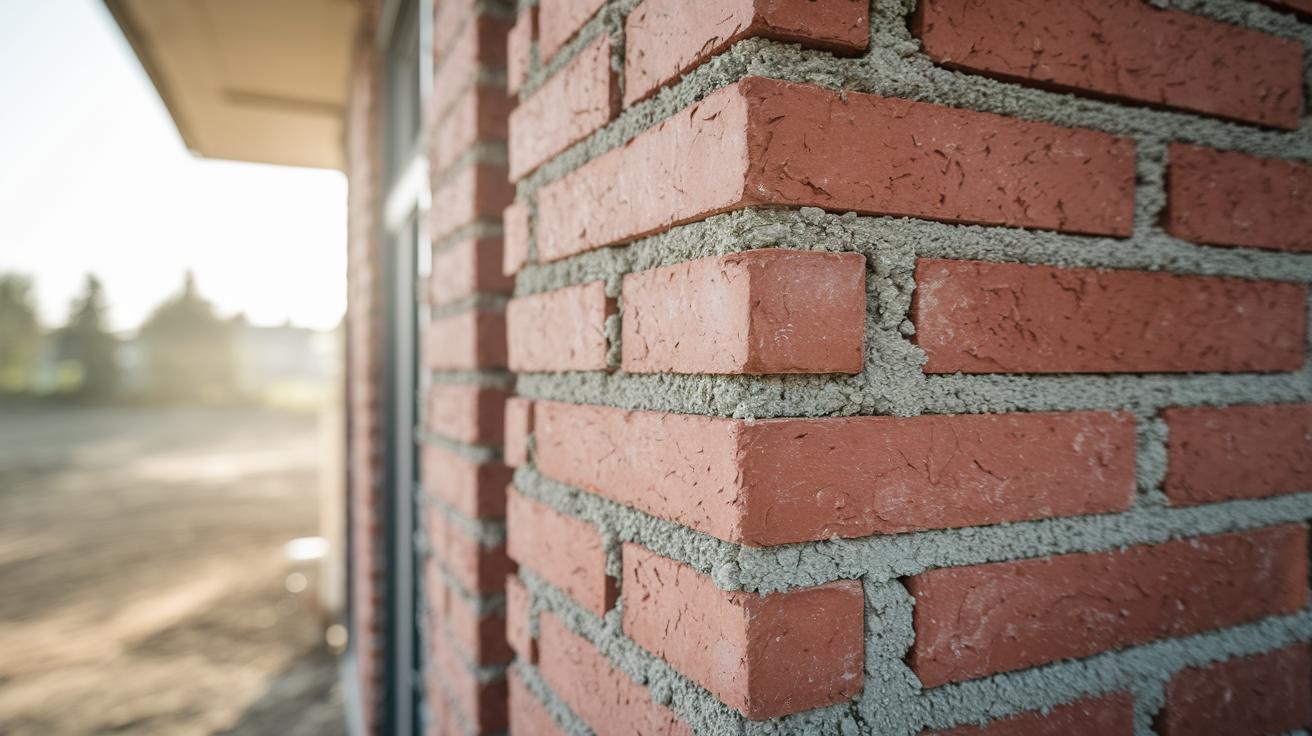
Thin brick veneer projects can run into problems that affect both the look and long-term strength. Common issues include using an adhesive that doesn’t bond well, applying uneven mortar that makes surfaces bumpy and panels misaligned, skipping spacers that keep gaps even, and not providing enough drainage or sealant to stop water from seeping in. These mistakes not only hurt the finished appearance but also lower durability over time.
To fix these issues, start by checking for loose or uneven bricks after installation. Look at each joint for small cracks and regrout them when needed. Clean the veneer regularly with a mild detergent and water to remove dirt without harming the mortar. Reseal the installation every 1–2 years (about every 12–24 months) to block moisture. A simple troubleshooting checklist can help you avoid costly repairs. Use a calculator to compare material costs, thin brick sheets against full brick options, and include the cost of special adhesive and expected labor time. This practical approach helps you manage overall expenses while keeping the veneer attractive and strong.
Final Words
In the action, this guide showed how to prep your surface, dry-fit your layout, apply full rows of mortar, and press thin brick veneer in place. You saw six clear steps covering everything from substrate prep to finishing with sealing, grout, and clean-up.
We broke down each step for safe thin brick installation while keeping things practical and budget-friendly. Follow these clear instructions to achieve a durable installation that looks great and stays on budget. Enjoy your project and take pride in a job well done!
FAQ
What is a thin brick installation PDF?
The thin brick installation PDF explains the process with step-by-step instructions, including a materials list, tools, and safety guidelines to help you install thin brick correctly.
How do you install thin brick exterior?
The method for installing thin brick on an exterior wall involves cleaning and prepping the substrate, mapping your layout with a dry-fit, applying thin-set mortar in rows, placing the brick sheets, grouting the joints, and sealing for durability.
What does the thin brick installation system involve?
The thin brick installation system involves using prefabricated brick sheets, applying specialized thin-set mortar over a well-prepped surface, and following a precise pattern to ensure proper alignment and adhesion.
What can I learn from a thin brick installation video?
A thin brick installation video shows you the practical steps like cleaning the substrate, mapping out the pattern, applying mortar, placing the thin brick veneer, grouting, and final cleanup while offering visual guidance for clarity.
How do you install thin brick on interior walls?
The procedure for installing thin brick on interior walls includes preparing the wall surface (such as clean drywall), applying a layer of thin-set mortar with a notched trowel, pressing the brick sheets into place, and finishing with grout to secure the design.
What details are covered in thin brick installation detail documents?
Thin brick installation detail documents cover essential steps like substrate preparation, mortar application with level alignment, proper joint spacing (about 3/8 in / 10 mm), and sealing procedures to protect the installation.
How do you install brick veneer on an exterior wall?
Installing brick veneer on an exterior wall means prepping the surface thoroughly, mapping out the bond pattern, applying thin-set mortar evenly, placing the veneer accurately with a level and plumb line, and finishing with grouting and sealing.
How do you install brick veneer on plywood?
The method for installing brick veneer on plywood involves adding a cement board as a base where needed, ensuring the surface is clean and dry, applying an even layer of thin-set mortar, and firmly pressing the veneer in place for secure attachment.
What is needed to install thin brick?
Installing thin brick requires key materials such as Brickwebb sheets, thin-set mortar designed for thin brick, grout, a grout float, level and plumb tools, and plastic spacers along with proper substrate preparation tools.
Does thin brick require control joints?
The inclusion of control joints in thin brick installation is essential; these joints allow for movement due to temperature changes and help prevent cracks from forming in the veneer.
Is cement board necessary for thin brick installation?
Cement board may be needed for thin brick installations on substrates that lack stability, such as plywood, to provide a solid, moisture-resistant base for the brick veneer.
How much does it cost to install thin brick?
The cost to install thin brick varies with the materials selected, labor rates, and project complexity; prices are typically estimated per square foot and include thin brick sheets, specialized mortar, and additional installation accessories.